
After the visit, you will be transferred to the San Cristobal airport in time for your flight back to the mainland.
Galapagos Seaman Journey
A jewel offering adventure, comfort and excellence…
$3.692,00 – $7.384,00Price range: $3.692,00 through $7.384,00
AM: Flight to Galapagos
On this day, you will fly to the Galapagos Island. Due to the Galapagos Government, a fee of 20 USD must be paid for the migration control card.
Once in Santa Cruz, passengers must go through an airport inspection point to ensure that no foreign plants or animals are being introduced to the archipelago. Also, this inspection point is where passengers have to pay for the entrance to the Galapagos National Park under the following parameters:
As of September 2024, Foreign Passengers $200 and Children $100 (under 12 years old).
Later on, your guide will pick you up and will carry your luggage to the bus. Passengers will arrive at the Catamaran Seaman Journey on a motorized boat called Pang
PM: Bartolome Island
Bartolome Island is situated across Sullivan Bay. It has an altitude of 114 meters, from where we can observe one of the most beautiful sceneries of the Galapagos Islands such as Volcanic cones, lunar-like craters, lava fields, and the famous Toba-formed pinnacle eroded by the sea. There is very little vegetation on this island.
It has two breathtaking beaches where marine turtles exist and at the base of the pinnacle, a tiny colony of Galapagos penguins.
AM: Mosquera Islet
Located between North Seymour and Baltra, Mosquera Islet is one of the smallest islands in the Galápagos. It is of volcanic origin, formed by geological uplift, has no visible crater, and its terrain is very flat.
One of the most striking features of Mosquera is the contrast of colors. A beautiful beach of white sand, transparent turquoise waters, lush green vegetation, and jet-black lava rocks. Landscape photography is highly recommended here, especially in the golden light conditions of early morning or at sunset.
PM: North Seymour
North Seymour is a raised island (rather than volcanic). Therefore, it is generally flat and filled with rocks. There are good nesting sites here for a large population of magnificent frigatebirds. Blue-footed boobies perform their courtship dance in the more open areas, and swallow-tailed gulls perch on the cliff edges.
Despite the tremendous surf that can pound the outer shore, sea lions haul out onto the beach and can be found body-surfing.
AM: El Barranco – The Cliff
The visitor site of El Barranco is located in the southern part of Darwin Bay on Genovesa Island. The trail is on volcanic rock, consists of 1.5 km, and can be done in about 2 hours. The youngest area of the island, from a geological point of view, lies in this area.
The cliff is located in the south and is composed of very fragile lava. The natural erosion in these lava flows has become the ideal place for nesting Storm Petrels. You can see two species of petrels that nest in cavities and holes in the lava.
One of its main predators is the short-eared owl. The red-footed booby nests only in the outer islands of the archipelago: Punta Pitt, Gardner (Floreana), Wolf, Darwin, and Genovesa. Also present on this island is the masked booby. During the “panga rides” along the cliffs, fur sea lions and several species of seabirds can be seen.
PM: Darwin Bay
This bay originated when the crater of this island collapsed below sea level. The wet landing is on a beautiful white coral sandy beach. This island is a favorite destination for birdwatchers, allowing the observation of several species including: red-footed boobies, masked boobies, wandering tattlers, lava gulls, whimbrels, yellow-crowned and black-crowned lava herons, and yellow warblers.
Continuing on the trail, visitors gradually climb to the edge of the cliff, where they can see Red-Foots nesting in the Mangrove trees below. Birdwatching opportunities include sightings of sharp-beaked finches, large cactus and ground finches, Galapagos doves, and swallow-tailed gulls. At the end of the trail, at the cliff’s edge, an incredible view of the island and the many birds living there can be observed.
AM: Plazas, Santa Cruz
Plazas is located to the east of Santa Cruz Island and forms part of two islands known as Islas Plazas. Despite its small size, some of the most interesting and outstanding species of the Galapagos are found here. The Plazas land iguanas are smaller than their relatives found on other islands.
Throughout the island, there are several hybrid iguanas, a result of crossing a male marine iguana and a female land iguana. They are unique, recognisable at first glance by their black/gray colour, with a land iguana’s crest, but face and tail of the marine iguana. The large population of iguanas is due to the presence of tunas, their favourite food. Swallow-tailed gulls nesting in the rugged cliffs are seen along with other seabirds such as Audubon shearwaters, red-billed tropicbirds, frigate birds,
PM: Santa Fe
Located in the southeastern part of the Galapagos, this island was formed from an uplift instead of a volcanic origin, which is why it is mostly flat. There are some theories which suggest this could be the oldest island in the Archipelago. Santa Fe is home to a number of endemic species like the Galapagos hawk, Galapagos snake, Galapagos mockingbird, rice rats, and one of the two species of land iguanas on the islands.
After disembarking in the beautiful and clear waters, you will be in contact with one of the many sea lion colonies. Along the trail, many salt bushes can be seen as well as giant prickly pear cacti: gigantism is a characteristic of oceanic islands. There are great possibilities for snorkelling with playful sea lions and tropical fish.
AM: David Rodriguez Land Tortoise Breeding Centre
In 2002, the Galapagos National Park Service undertook the programme for the breeding and care of tortoises in captivity, establishing for this purpose the Tortoise Breeding Centre at that time with the name of Jacinto Gordillo. In 2016, it changed its name to the Tortoise Breeding Centre with the name of “David Rodriguez,” in recognition of the 39 years of service to the Institution of the park ranger.
The David Rodriguez Tortoise Breeding Centre is located in the southeast of San Cristobal, 22.5 km from Puerto Baquerizo Moreno. Access is by land; the bus trip takes approximately 40 minutes and is located in the vicinity of Cerro Colorado. This breeding centre has been built to improve the population status of giant tortoises, Chelonoides chathamensis of San Cristóbal Island in an environment with conditions similar to their natural state, and in this way, promote the tourist development of San Cristóbal.
After the visit, you will be transferred to the San Cristobal airport in time for your flight back to the mainland.
AM: Flight to Galapagos
This day, you will fly to the Galapagos Island. Due to the Galapagos Government, a fee of 20 USD must be paid for the migration control card.
Once in San Cristobal, passengers must go through an inspection point at the airport to make sure that no foreign plants or animals are being introduced to the archipelago. Also, this inspection point is where passengers have to pay for the entrance to the Galapagos National Park under the following parameters:
As of September 2024, Foreign Passengers $200 and Children $100 (under 12 years old).
Later on, your guide will pick you up, and will carry your luggage to the bus. Passengers will arrive at the Catamaran Seaman Journey on a motorized boat called a panga.
PM: Gianni Arismendy Environmental Interpretation Centre
This is an interpretation center with exuberant gardens and stunning ocean views. Visitors at the interpretation center can learn a lot about the geological and human history of the islands, conservation facts and natural history. This is the oldest museum of Natural History in the Galapagos Islands which attempts to preserve the archipelago. It is indeed inspiring and motivating to watch and learn about all of their research and attempts.
AM: San Cristobal Island, Punta Pitt
Punta Pitt is located at the eastern end of the island of San Cristobal, with a beach of approximately 90 metres and several natural viewpoints overhanging an eroded hill of volcanic tuff.
A 1,400-metre trail leads from the beach called Oliviana to the top of the hill, which is coloured by different types of lava.
The strong winds present on the hill have caused a natural erosion that produces fantastic and memorable landscapes that look like something out of a science fiction movie.
A beautiful olive yellow colour with bright crystals from the erosion of lava and shells paints the sand of Oliviana beach, where sea lions lie in the sun watching the flight of frigate birds, pelicans, herons and seagulls.
Pitt islet is one of the few places where the three species of boobies (blue-footed, red-footed and masked) and the two species of frigate birds can be observed in the same area.
PM: Lobos Island, San Cristobal Island
Isla Lobos is a small, flat islet. The name Isla Lobos is given to it as it is home to several sea lions, which frolic on the beach; their brown fur stands out against the white sand. Isla Lobos is approximately 20 minutes by boat (10 kilometres) from Puerto Baquerizo Moreno on San Cristobal Island.
Classified as a tourist diving site, it has 2 piers from which tourists can explore the bottom of the ocean accompanied by sea lions.
In its waters, a protected channel offers a fantastic place for snorkelling. An 850-metre long trail runs along the island, connecting the two piers. The estimated time of the walk is one hour, during which you can observe coastal vegetation of saltwater-tolerant plants. Its name is due to the two species of sea lions that inhabit it. The sea lions are related to the California sea lions, while the two-furred sea lions, known as fur seals, have their origins in Antarctica.
AM: Gardner Bay
Located on the north-eastern coast of Hood Island, Gardner Bay offers an excellent beach for relaxing, swimming, and even kayaking, along with the opportunity to observe sea lions (Zalophus wollebaki). Here, we can also spot sharks in the crystal-clear ocean waters.
At this location, you can observe three species of Darwin finches:
A subspecies of the large-billed cactus finch (Geospiza fuliginosa), which resembles the large-billed terrestrial finch;
The small-beaked ground finch (Geospiza fuliginosa); and
The singing finch (Certhidea Olivacea), another endemic subspecies.
Both resident and migratory birds can be observed in this area.
PM: Suarez Point
This area is excellent for spotting blue-footed boobies, albatrosses, and Nazca boobies. Situated on the oceanfront, it is a beautiful site where the large waved albatrosses use the cliff as a launching pad. The famous attraction here is the magnificent blowhole, which spurts water high into the air, reaching heights of at least 50 to 75 meters. This site offers wonderful photography opportunities.
AM: Cormorant Point, Champion Islet
This site probably offers the best flamingo lagoon in the Galapagos; it is also one of the largest in the islands. It’s situated between two tuff lava cones that give the area a special atmosphere. There are various species of shorebirds to observe besides flamingos; the most frequent are common stilts, white-cheeked pintail ducks, and other migratory birds. It is very interesting to see the two distinct beaches: “The Green Beach” (due to its high percentage of olivine crystals in the sand) and the “Flour Sand Beach” which is made up of coral.
After the interesting walk, the group is taken to Champion Islet, a great place to enjoy snorkelling and underwater wildlife. Some of the animals that can be seen are sea turtles, sea lions, and multiple fish thanks to the nearby coral reef.
PM: Post Office Bay
Historically, this site is the location of a wooden barrel that was placed in the 18th century by the crew of a whaling ship. It has been used since this time by mariners and tourists as a post office. The idea is to carry letters or postcards to their destination by hand. Besides, this site was the landing area for some of the first colonists. This day’s afternoon is thought to be a relaxing time for visitors to enjoy the beach and the beauty of Galapagos.
AM: Fausto Llerena Breeding Centre
The Fausto Llerena Breeding Centre is located in the Galapagos National Park, on Charles Darwin Avenue, at a distance of 1 km from the Gus Angermeyer Tourist Pier. After a 40-minute walk, the attraction is part of the network of visitor sites of the Charles Darwin Foundation.
The visit starts at the information booth of the Galapagos National Park Service (SPNG). The trail leads to the Van Straelen Interpretation Centre, then to the breeding centre. From there, an elevated circular path begins, made of wood, from where you can observe Lonesome George and the tortoises of Española Island. It ends at the tortoise exhibition corral.
After the visit, you will be transferred to the Baltra airport in time for your flight back to the mainland.
AM: Flight to Galapagos
Today, you will fly to the Galapagos Islands. Due to the Galapagos Government’s regulations, a fee of 20 USD must be paid for the migration control card.
Once in Santa Cruz, passengers must go through an inspection point at the airport to ensure that no foreign plants or animals are being introduced to the archipelago. Additionally, this inspection point is where passengers have to pay for the entrance to the Galapagos National Park under the following parameters:
As of September 2024, foreign passengers $200 and children $100 (under 12 years old).
Our guide will pick you up and carry your luggage to the bus that transports tourists to the ferries to cross the Itabaca Channel. After this, you will be taken by another bus for the first visit to Ranch Manzanillo where visitors must wear comfortable walking shoes, light clothing, a waterproof jacket, sunblock lotion, and carry a camera and repellent for the first activity. The visit to Ranch Manzanillo includes a picnic lunch and a short walk before boarding the Motor Catamaran. It is important to follow these instructions in order to accomplish this itinerary properly. Please be aware that passengers’ luggage will be sent directly to the Seaman Journey yacht.
Santa Cruz offers excellent opportunities to observe the wild Galapagos Tortoises. Tracking tortoises is not the only exciting activity to be found in the highlands. There are also plenty of lava tubes, sinkholes, and craters ready to be explored. After this visit, they moved to the M/C Seaman Journey.
AM: Moreno Point, Isabela Island
Punta Moreno is located on the north coast of Isabela Island, between the Sierra Negra volcano and Cerro Azul volcano.
The trail runs along a Pahoehoe lava flow (solidified lava in the form of corrugated or an accordion) into a complex of coastal lagoons. Several species of birds can be found around these lakes and mangroves.
PM: Fernandina Island, Mangle Point
Off the eastern coast of Fernandina, Mangle Point can be found. It is a superior snorkelling site and a beautiful location for riding in a panga or zodiac through a grove of mangrove trees. A hike of about 1/2 mile is possible. While you are on your ride, you are likely to see sea lions, tortoises, pelicans, rays, and too many birds to name them all.
AM: Isabela Island, Urbina Bay
Urbina Bay is located at the base of Alcedo Volcano on the west coast, between Tagus Cove and Elizabeth Bay. This area experienced a major uplift in 1954, which caused the land to rise over 16 feet. The coast expanded half a mile out, leaving marine life stranded on the new shore. This area is also a great place to snorkel. Urbina Bay is a path that starts off with a wet landing. The course is approximately 3200m, and is made up of sand, pumice, lava, coral and vegetation where one can observe iguana burrows. It is an ideal place to see red and blue lobsters!
In Urbina Bay, you can see Darwin’s finches. Its main attraction is the land iguanas, which are larger than those in places like South Plaza Island and Galapagos. Tortoises also live in the wild; sometimes, even out of season, they are on the bottom of the islands. A large amount of vegetation can be observed such as chamomile and Rosewood, but among all these plants, the beautiful flowers of Darwin’s cotton, endemic to the Galapagos Islands, stand out.
PM: Isabela Island, Tagus Cove
Tagus Cove is located west of Darwin Volcano on Isabela Island. This was a favourite spot for pirates and whalers, and it was they who started the following tradition: the inscription of the names of boats. At the beginning of the trail, you will see a small cave where you will find inscriptions dating back to the 1800s.
Its name originated from a British warship that passed through the islands in 1814 looking for Galapagos Tortoises for food. Due to former eruptions, the substrate has a large amount of volcanic rocks of different sizes, among the most common are little balls of nearly spherical shape known as “lapilli” or petrified rain.
AM: Fernandina Island, Espinoza Point
Espinoza Point is a renowned location recognized for its extensive colonies of marine iguanas and as the habitat of unique species such as the flightless cormorant, Galapagos penguin, Galapagos hawk, and Galapagos snake.
PM: Vicente Roca Point
One of the most impressive and spectacular places in the enchanted Galapagos Islands, with high cliffs and tuffstone, ash, and lava formations giving this area a majestic touch, is Punta Vicente Roca. Located on the northwestern coast of the island, it comprises two distinct islets. This large bay boasts spectacular marine life.
Here, you can see seahorses, sea turtles, and the strange yet fascinating Mola-mola or sunfish. This bay is a great place for practicing Panga Rides and Snorkeling.
You can also find penguins, blue-footed boobies, terns, boobies, and sea lions. Additionally, you can snorkel and observe sea turtles, stingrays, and pufferfishes.
AM: Espumilla Beach
Espumilla Beach is located on the northern coast of Santiago Island in James Bay. During the last occurrence of the El Niño phenomenon, one of the two lagoons at this site underwent a process of sedimentation, thus causing the disappearance of a representative colony of flamingos. The main attractions are the palo santo forest and the nesting of baby turtles.
PM: Puerto Egas
Its black beach is located on the west side of the island and is the main attraction of the island. Its volcanic tuff deposits have favoured the formation of this special black sand beach.
This site is called Puerto Egas, because there was an attempt to start the exploitation of salt, which failed because the price of salt on the continent was very low, and did not justify its exploitation in Galapagos. The project and the infrastructure were left abandoned.
AM: Rabida Island
Rábida Island is unique due to the red colour that colours all rocks and sand. The volcanic material on this island is very porous and external factors such as rain, salty water, and sea breeze have acted as oxidising agents.
A short walk along a trail leads you to a coastal lagoon behind the beach, which allows you to observe land birds such as finches, doves, yellow warblers, and mockingbirds. At the lagoon, there is a colony of flamingos.
PM: Chinese Hat – Sombrero Chino
This is a small islet located just off the southeastern tip of Santiago Island. It is a recent volcanic cone, shaped like a Chinese hat when seen from the north. On the west, you can see lava formations, formed under the sea and raised upwards, which is why coral heads are found on the lava.
This is an excellent visit for interpretation of geological features such as lava tubes and lava flows. The landscape is covered by sea lion colonies, marine iguanas, and Galapagos penguins.
AM: Black Turtle Cove, Santa Cruz Island
A dinghy ride to Black Turtle Cove, located on the north coast of Santa Cruz, just west of Baltra, offers a window into a quiet hideaway of the Galapagos.
Once in the cove, the boat continues with the engines off and begins to explore the mangrove-protected cove.
Sea turtles feed and mate in the calm waters, and three species of sharks are found here: the black-tip shark, the white-tip shark, and the Galapagos shark.
Groups of spotted rays are also often seen, as well as egrets and herons.
After the visit, you will be transferred to the Baltra airport in time for your flight back to the mainland.
AM: Flight to Galapagos
On this day, you will fly to the Galapagos Island. Due to the Galapagos Government, a fee of 20 USD must be paid for the migration control card.
Once in Santa Cruz, passengers must go through an airport inspection point to ensure that no foreign plants or animals are being introduced to the archipelago. Also, this inspection point is where passengers have to pay for the entrance to the Galapagos National Park under the following parameters:
As of September 2024, Foreign Passengers $200 and Children $100 (under 12 years old).
Later on, your guide will pick you up and will carry your luggage to the bus. Passengers will arrive at the Catamaran Seaman Journey on a motorized boat called Panga.
PM: Bartolome Island
Bartolome Island is situated across Sullivan Bay. It has an altitude of 114 meters, from where we can observe one of the most beautiful sceneries of the Galapagos Islands such as Volcanic cones, lunar-like craters, lava fields, and the famous Toba-formed pinnacle eroded by the sea. There is very little vegetation on this island.
It has two breathtaking beaches where marine turtles exist and at the base of the pinnacle, a tiny colony of Galapagos penguins.
AM: Mosquera Islet
Located between North Seymour and Baltra, Mosquera Islet is one of the smallest islands in the Galápagos. It is of volcanic origin, formed by geological uplift, has no visible crater, and its terrain is very flat.
One of the most striking features of Mosquera is the contrast of colors. A beautiful beach of white sand, transparent turquoise waters, lush green vegetation, and jet-black lava rocks. Landscape photography is highly recommended here, especially in the golden light conditions of early morning or at sunset.
PM: North Seymour
North Seymour is a raised island (rather than volcanic). Therefore, it is generally flat and filled with rocks. There are good nesting sites here for a large population of magnificent frigatebirds. Blue-footed boobies perform their courtship dance in the more open areas, and swallow-tailed gulls perch on the cliff edges.
Despite the tremendous surf that can pound the outer shore, sea lions haul out onto the beach and can be found body-surfing.
AM: Genovesa, Island El Barranco – The Cliff
The visitor site of El Barranco is located in the southern part of Darwin Bay on Genovesa Island. The trail is on volcanic rock, consists of 1.5 km, and can be done in about 2 hours. The youngest area of the island, from a geological point of view, lies in this area.
The cliff is located in the south and is composed of very fragile lava. The natural erosion in these lava flows has become the ideal place for nesting Storm Petrels. You can see two species of petrels that nest in cavities and holes in the lava.
One of its main predators is the short-eared owl. The red-footed booby nests only in the outer islands of the archipelago: Punta Pitt, Gardner (Floreana), Wolf, Darwin, and Genovesa. Also present on this island is the masked booby. During the “panga rides” along the cliffs, fur sea lions and several species of seabirds can be seen.
PM: Darwin Bay
This bay originated when the crater of this island collapsed below sea level. The wet landing is on a beautiful white coral sandy beach. This island is a favorite destination for birdwatchers, allowing the observation of several species including: red-footed boobies, masked boobies, wandering tattlers, lava gulls, whimbrels, yellow-crowned and black-crowned lava herons, and yellow warblers.
Continuing on the trail, visitors gradually climb to the edge of the cliff, where they can see Red-Foots nesting in the Mangrove trees below. Birdwatching opportunities include sightings of sharp-beaked finches, large cactus and ground finches, Galapagos doves, and swallow-tailed gulls. At the end of the trail, at the cliff’s edge, an incredible view of the island and the many birds living there can be observed.
AM: Plazas, Santa Cruz
Plazas is located to the east of Santa Cruz Island and forms part of two islands known as Islas Plazas. Despite its small size, some of the most interesting and outstanding species of the Galapagos are found here. The Plazas land iguanas are smaller than their relatives found on other islands.
Throughout the island, there are several hybrid iguanas, a result of crossing a male marine iguana and a female land iguana. They are unique, recognisable at first glance by their black/gray colour, with a land iguana’s crest, but face and tail of the marine iguana. The large population of iguanas is due to the presence of tunas, their favourite food. Swallow-tailed gulls nesting in the rugged cliffs are seen along with other seabirds such as Audubon shearwaters, red-billed tropicbirds, frigate birds, and brown pelicans.
PM: Santa Fe
Located in the southeastern part of the Galapagos, this island was formed from an uplift instead of a volcanic origin, which is why it is mostly flat. There are some theories which suggest this could be the oldest island in the Archipelago. Santa Fe is home to a number of endemic species like the Galapagos hawk, Galapagos snake, Galapagos mockingbird, rice rats, and one of the two species of land iguanas on the islands.
After disembarking in the beautiful and clear waters, you will be in contact with one of the many sea lion colonies. Along the trail, many salt bushes can be seen as well as giant prickly pear cacti: gigantism is a characteristic of oceanic islands. There are great possibilities for snorkelling with playful sea lions and tropical fish.
AM: David Rodriguez Land Tortoise Breeding Centre
In 2002, the Galapagos National Park Service undertook the programme for the breeding and care of tortoises in captivity, establishing for this purpose the Tortoise Breeding Centre at that time with the name of Jacinto Gordillo. In 2016, it changed its name to the Tortoise Breeding Centre with the name of “David Rodriguez,” in recognition of the 39 years of service to the Institution of the park ranger.
The David Rodriguez Tortoise Breeding Centre is located in the southeast of San Cristobal, 22.5 km from Puerto Baquerizo Moreno. Access is by land; the bus trip takes approximately 40 minutes and is located in the vicinity of Cerro Colorado. This breeding centre has been built to improve the population status of giant tortoises, Chelonoides chathamensis of San Cristóbal Island in an environment with conditions similar to their natural state, and in this way, promote the tourist development of San Cristóbal.
PM: Gianni Arismendy Environmental Interpretation Centre
This is an interpretation center with exuberant gardens and stunning ocean views. Visitors at the interpretation center can learn a lot about the geological and human history of the islands, conservation facts and natural history. This is the oldest museum of Natural History in the Galapagos Islands which attempts to preserve the archipelago. It is indeed inspiring and motivating to watch and learn about all of their research and attempts.
AM: San Cristobal Island
Punta Pitt is located at the eastern end of the island of San Cristobal, with a beach of approximately 90 metres and several natural viewpoints overhanging an eroded hill of volcanic tuff.
A 1,400-metre trail leads from the beach called Oliviana to the top of the hill, which is coloured by different types of lava.
The strong winds present on the hill have caused a natural erosion that produces fantastic and memorable landscapes that look like something out of a science fiction movie.
A beautiful olive yellow colour with bright crystals from the erosion of lava and shells paints the sand of Oliviana beach, where sea lions lie in the sun watching the flight of frigate birds, pelicans, herons and seagulls.
Pitt islet is one of the few places where the three species of boobies (blue-footed, red-footed and masked) and the two species of frigate birds can be observed in the same area.
PM: Lobos Island, San Cristobal Island
Isla Lobos is a small, flat islet. The name Isla Lobos is given to it as it is home to several sea lions, which frolic on the beach; their brown fur stands out against the white sand. Isla Lobos is approximately 20 minutes by boat (10 kilometres) from Puerto Baquerizo Moreno on San Cristobal Island.
Classified as a tourist diving site, it has 2 piers from which tourists can explore the bottom of the ocean accompanied by sea lions.
In its waters, a protected channel offers a fantastic place for snorkelling. An 850-metre long trail runs along the island, connecting the two piers. The estimated time of the walk is one hour, during which you can observe coastal vegetation of saltwater-tolerant plants. Its name is due to the two species of sea lions that inhabit it. The sea lions are related to the California sea lions, while the two-furred sea lions, known as fur seals, have their origins in Antarctica.
AM: Española Island, Gardner Bay
Located on the north-eastern coast of Hood Island, Gardner Bay offers an excellent beach for relaxing, swimming, and even kayaking, along with the opportunity to observe sea lions (Zalophus wollebaki). Here, we can also spot sharks in the crystal-clear ocean waters.
At this location, you can observe three species of Darwin finches:
A subspecies of the large-billed cactus finch (Geospiza fuliginosa), which resembles the large-billed terrestrial finch;
The small-beaked ground finch (Geospiza fuliginosa); and
The singing finch (Certhidea Olivacea), another endemic subspecies.
Both resident and migratory birds can be observed in this area.
PM: Suarez Point
This area is excellent for spotting blue-footed boobies, albatrosses, and Nazca boobies. Situated on the oceanfront, it is a beautiful site where the large waved albatrosses use the cliff as a launching pad. The famous attraction here is the magnificent blowhole, which spurts water high into the air, reaching heights of at least 50 to 75 meters. This site offers wonderful photography opportunities.
AM: Cormorant Point, Champion Islet
This site probably offers the best flamingo lagoon in the Galapagos; it is also one of the largest in the islands. It’s situated between two tuff lava cones that give the area a special atmosphere. There are various species of shorebirds to observe besides flamingos; the most frequent are common stilts, white-cheeked pintail ducks, and other migratory birds. It is very interesting to see the two distinct beaches: “The Green Beach” (due to its high percentage of olivine crystals in the sand) and the “Flour Sand Beach” which is made up of coral.
After the interesting walk, the group is taken to Champion Islet, a great place to enjoy snorkelling and underwater wildlife. Some of the animals that can be seen are sea turtles, sea lions, and multiple fish thanks to the nearby coral reef.
PM: Post Office Bay
Historically, this site is the location of a wooden barrel that was placed in the 18th century by the crew of a whaling ship. It has been used since this time by mariners and tourists as a post office. The idea is to carry letters or postcards to their destination by hand. Besides, this site was the landing area for some of the first colonists. This day’s afternoon is thought to be a relaxing time for visitors to enjoy the beach and the beauty of Galapagos.
AM: Fausto Llerena Breeding Centre
The Fausto Llerena Breeding Centre is located in the Galapagos National Park, on Charles Darwin Avenue, at a distance of 1 km from the Gus Angermeyer Tourist Pier. After a 40-minute walk, the attraction is part of the network of visitor sites of the Charles Darwin Foundation.
The visit starts at the information booth of the Galapagos National Park Service (SPNG). The trail leads to the Van Straelen Interpretation Centre, then to the breeding centre. From there, an elevated circular path begins, made of wood, from where you can observe Lonesome George and the tortoises of Española Island. It ends at the tortoise exhibition corral.
After the visit, you will be transferred to the Baltra airport in time for your flight back to the mainland.
Please note that these itineraries may change without prior notice due to operational reasons, weather conditions, or directives from the galapagos national park authorities.
"*" indicates required fields
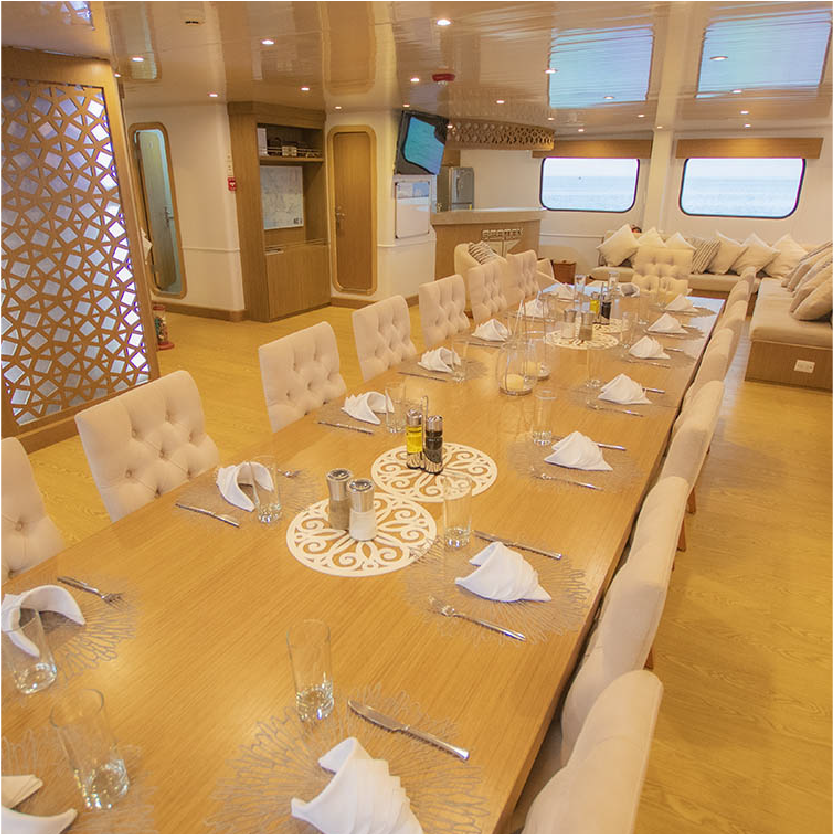
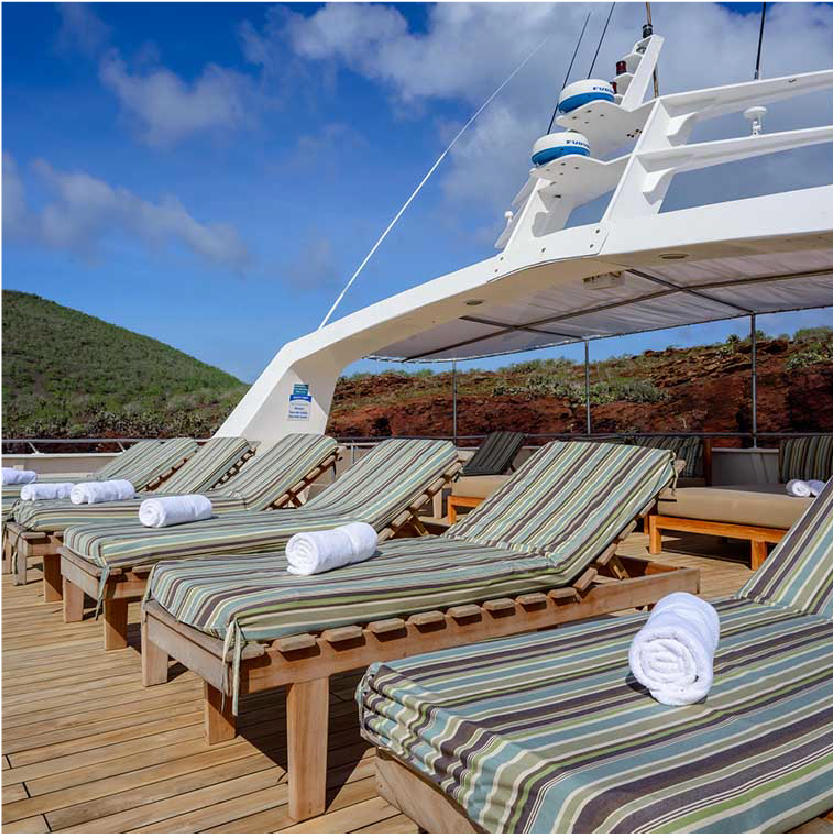
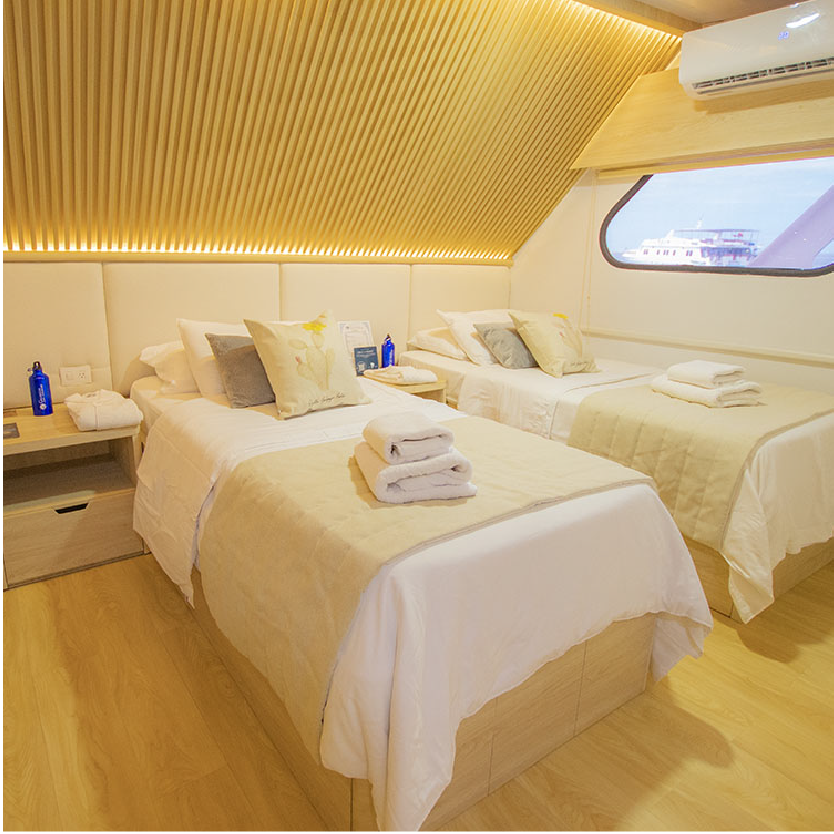
Galapagos First-Class boat cruises offer a high level of comfort and service, providing spacious cabins, elegant common areas, and gourmet dining. These vessels typically feature attentive staff, expert naturalist guides, and well-designed itineraries that maximize wildlife encounters and exploration. Expect a more intimate and luxurious experience, balancing immersive adventure with exceptional amenities for a truly memorable journey through the archipelago.

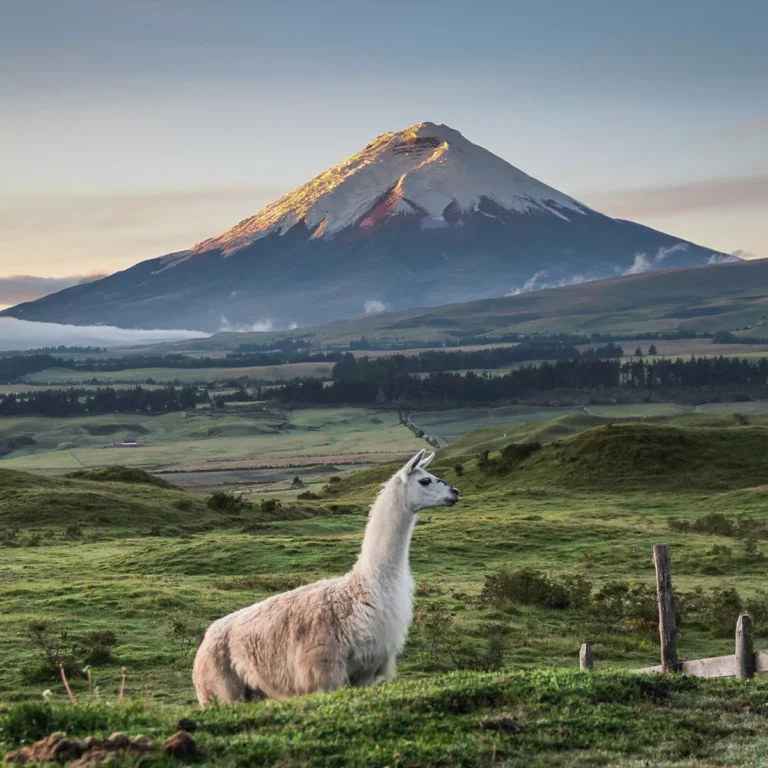
Ecuador travel offers an incredibly diverse and compact experience. From the unique, wildlife-rich Galapagos Islands and the majestic peaks of the Andes Highlands with their vibrant indigenous cultures, to the lush, biodiverse Amazon rainforest and the laid-back Pacific coast, Ecuador packs a world of natural wonders and cultural encounters into a relatively small area.
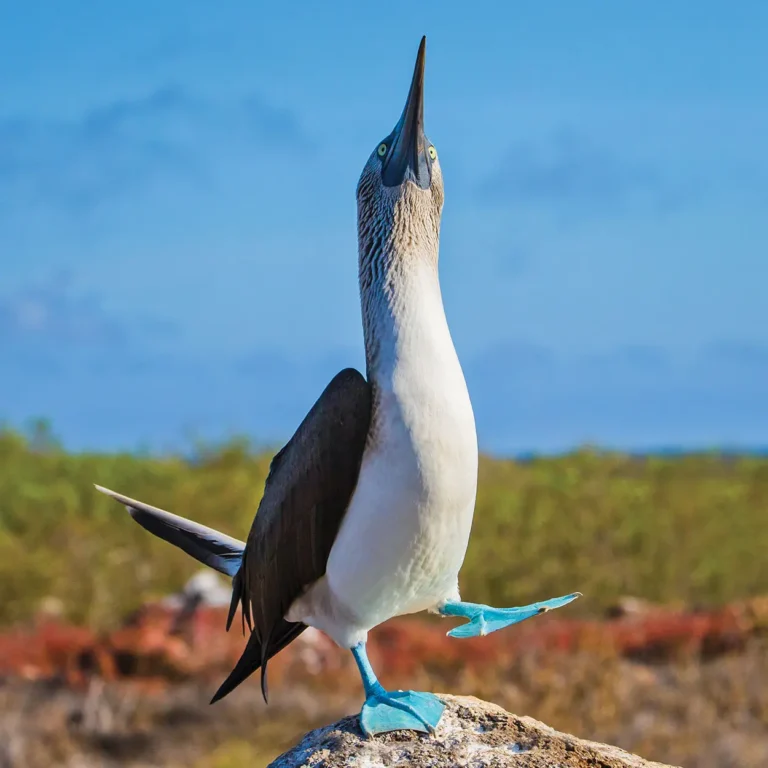
Galapagos tours provide an incredible opportunity to explore a unique volcanic archipelago teeming with fearless, endemic wildlife. Led by knowledgeable naturalists, these multi-day excursions offer close encounters with diverse species through guided walks, snorkeling, and boat navigation, revealing the islands' raw beauty and evolutionary marvels.
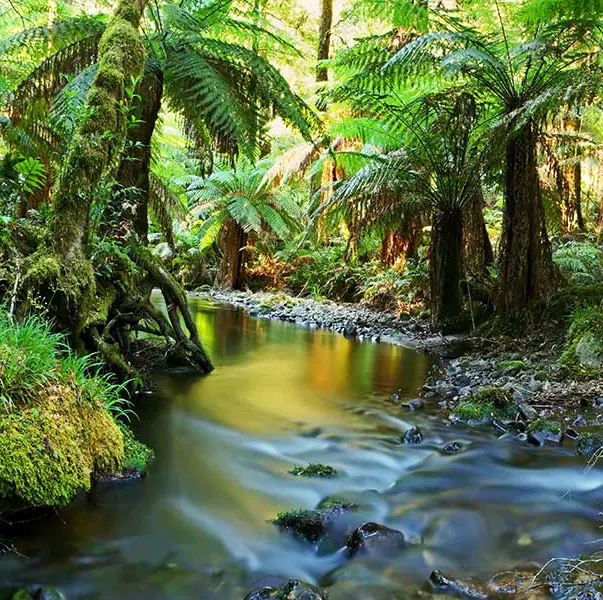
Ecuador rainforest expeditions offer deep dives into the heart of the Amazon, providing unparalleled immersion in one of the world's most biodiverse ecosystems. These journeys combine thrilling wildlife encounters—spotting monkeys, vibrant birds, and elusive predators—with cultural exchanges with indigenous communities, all while navigating lush landscapes and winding rivers.
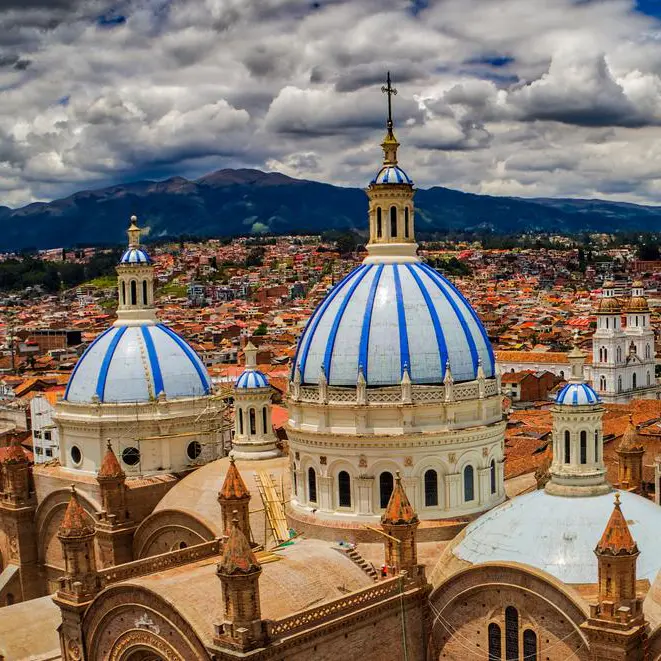
Explore the vibrant heart of Ecuador's Andes with activities like hiking majestic volcanoes (Cotopaxi, Chimborazo), exploring picturesque colonial cities (Quito, Cuenca), bargaining for unique crafts at bustling indigenous markets (Otavalo), and discovering hidden cloud forests. Enjoy horseback riding, mountain biking, or simply soaking in the breathtaking mountain vistas and rich cultural heritage.
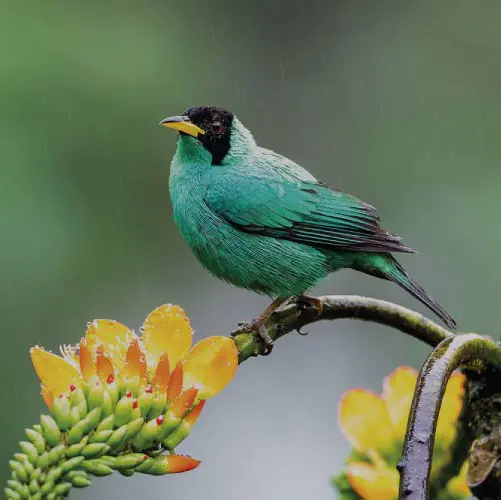
Ecuador is a birder's paradise, boasting an incredible diversity of species across its varied ecosystems. Birdwatching tours in Ecuador offer unparalleled opportunities to spot vibrant hummingbirds in the cloud forests, rare antpittas in the Andes, colorful macaws in the Amazon, and unique endemic species in the Galapagos.
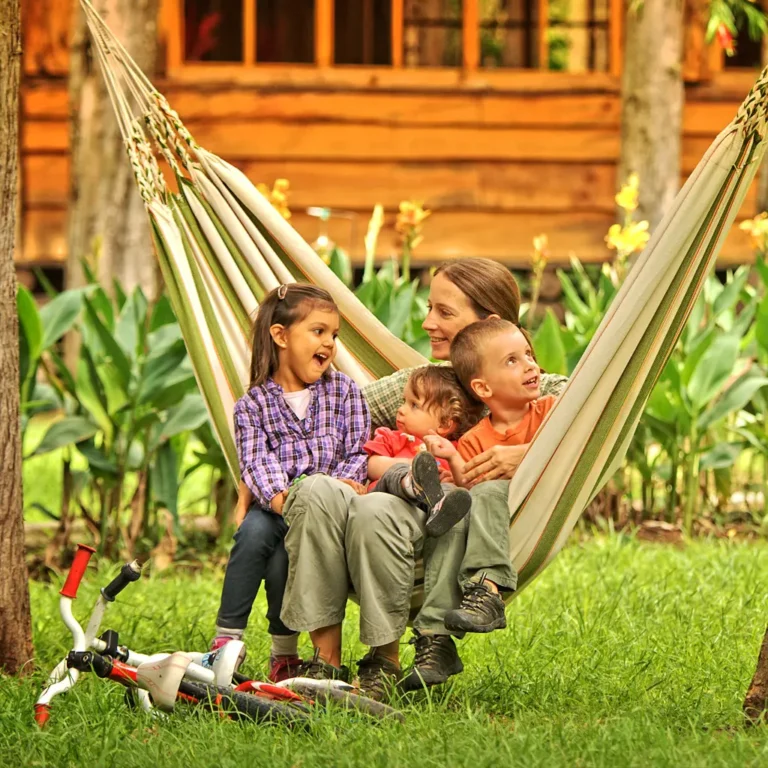
Family journeys in Ecuador offer diverse and engaging adventures for all ages. From wildlife encounters in the Galapagos and Amazon rainforest that spark wonder in children, to cultural explorations in the Andes highlands with their vibrant markets and charming towns, and relaxing moments on the Pacific coast, Ecuador provides a safe and stimulating environment for creating unforgettable family memories.
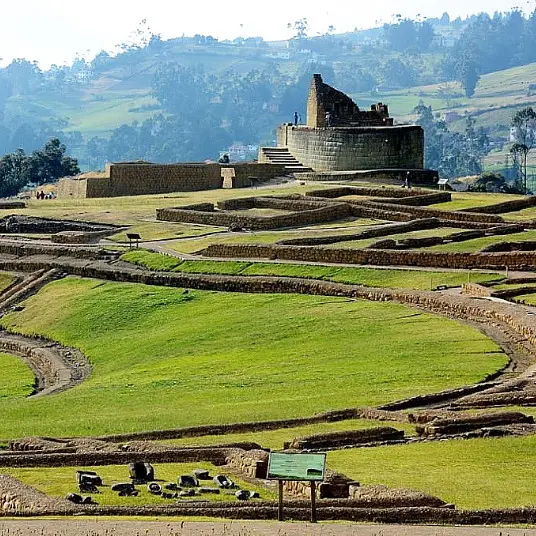
Ecuador's History & Archeology tours delve into a rich past, from ancient pre-Incan civilizations to the grandeur of the Inca Empire and the legacy of Spanish colonialism. Explore meticulously preserved colonial cities like Quito, a UNESCO World Heritage site, discover enigmatic archeological sites such as Ingapirca with its impressive Inca ruins, and learn about the diverse cultures that shaped this fascinating nation.
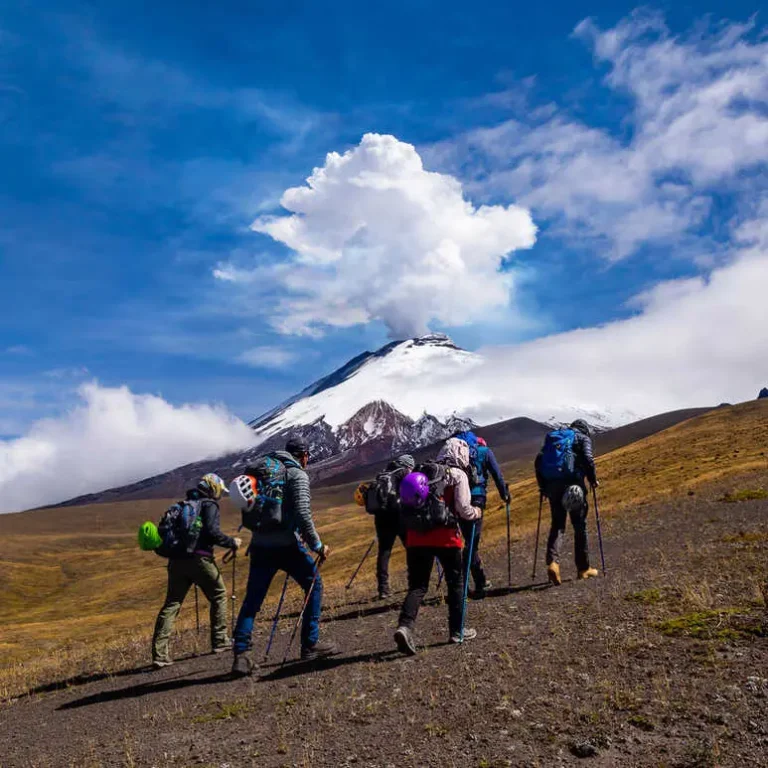
Ecuador hiking and trekking tours offer an extraordinary range of experiences amidst stunning Andean landscapes. From challenging ascents of majestic volcanoes like Cotopaxi and Chimborazo to scenic multi-day treks through cloud forests and paramo, and more gentle walks to explore indigenous villages.
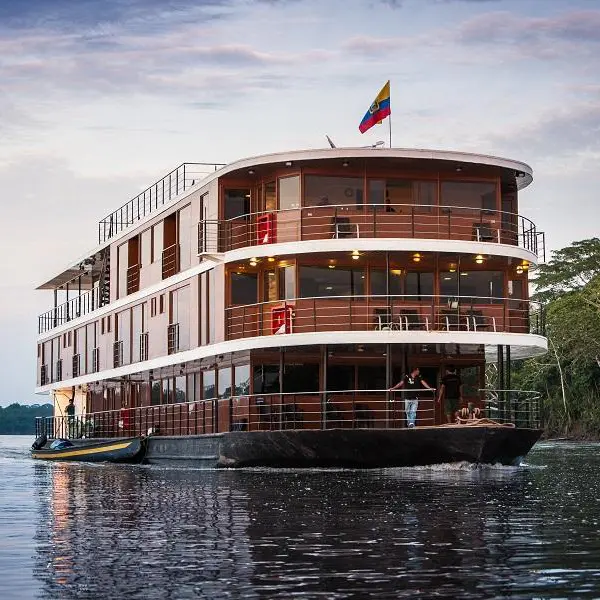
Ecuador boat cruises primarily focus on the Galapagos Islands, offering an unparalleled way to explore this unique archipelago. Options range from comfortable tourist-class vessels to luxurious yachts, providing accommodations, meals, and daily guided excursions. While less common, some river cruises also operate in the Amazon.
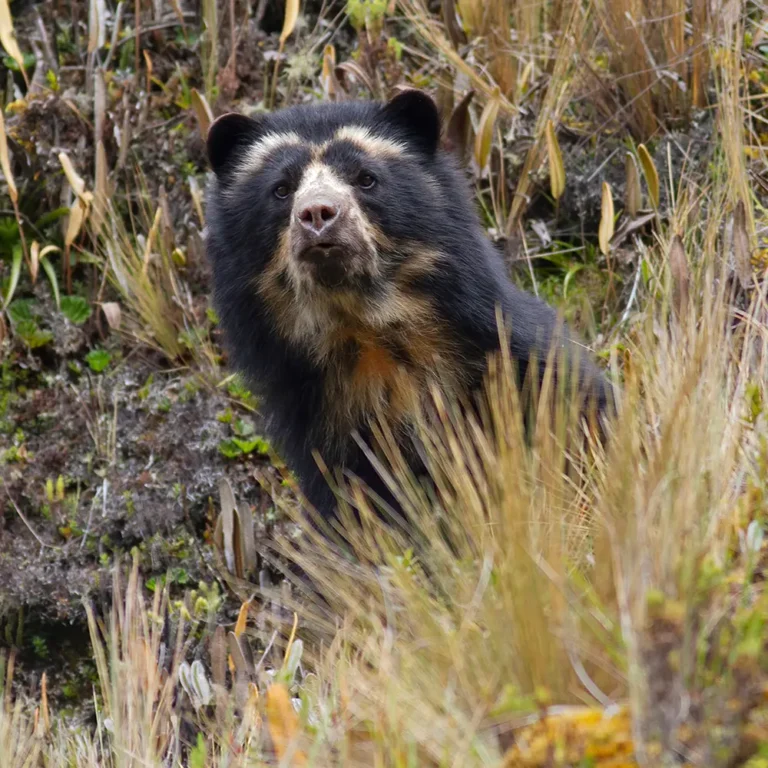
Ecuador's Nature and Wildlife tours are an absolute delight for nature lovers, offering unparalleled biodiversity in a compact country. Explore the unique, fearless wildlife of the Galapagos Islands, discover a profusion of species in the Amazon rainforest (monkeys, macaws, anacondas), and encounter rare birds and fascinating mammals in the Andean cloud forests and paramo.
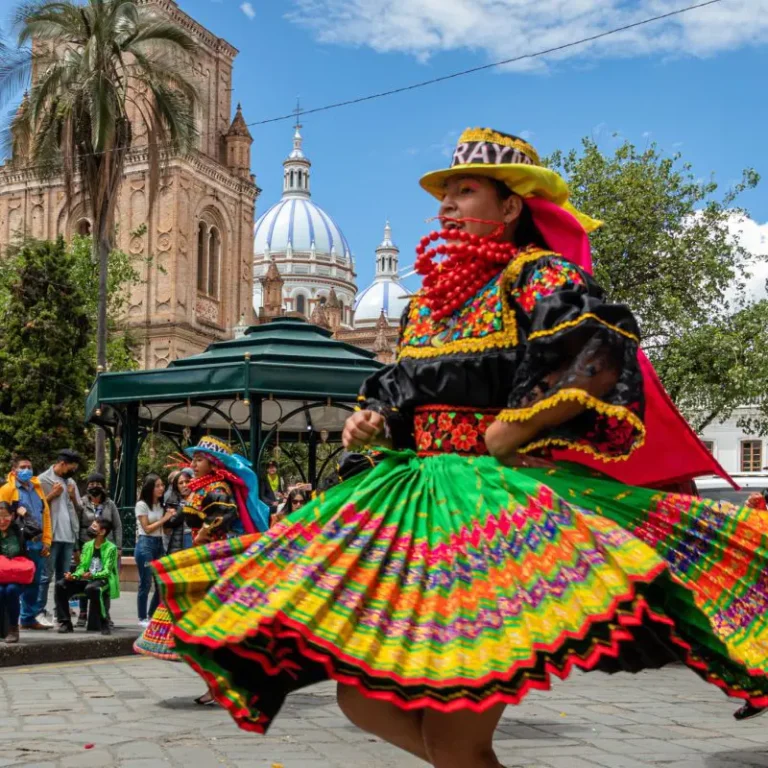
Ecuador People and Culture tours offer a vibrant immersion into the heart of this diverse nation. Explore bustling indigenous markets like Otavalo, where ancient traditions thrive through colorful textiles and handicrafts. Discover the architectural grandeur and living history of UNESCO World Heritage cities like Quito and Cuenca.
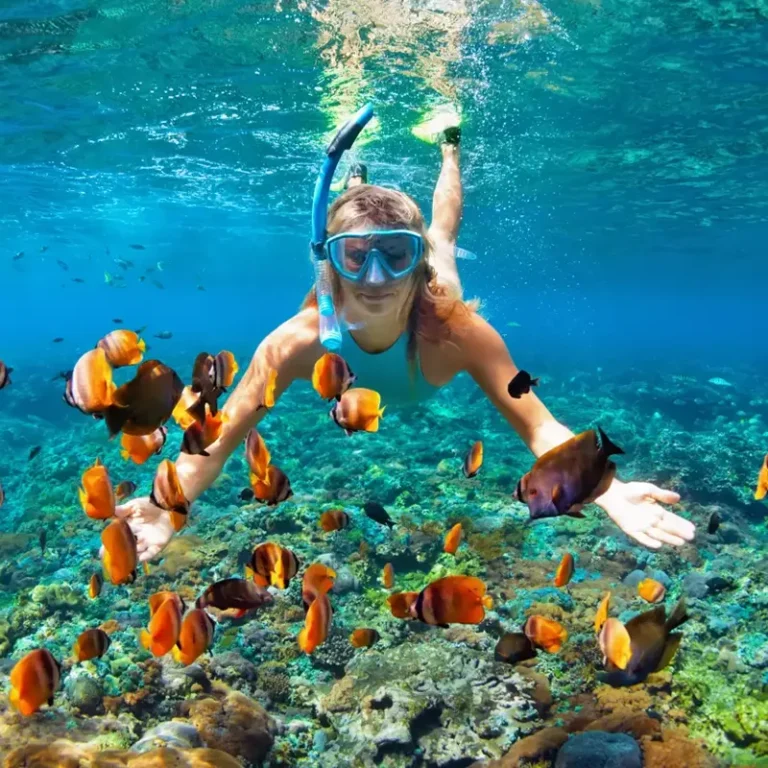
Ecuador's snorkeling and diving tours primarily focus on the Galapagos Islands, offering an unparalleled underwater adventure. Dive into crystal-clear waters teeming with unique marine life found nowhere else: playful sea lions, graceful sea turtles, hammerhead sharks, whale sharks, marine iguanas, and countless colorful fish.
Stay in the know…
Sign up to our email mailing list and have all the latest Ecuador Nature Expeditions travel inspiration sent direct to your inbox.
By signing up you are giving us permission to contact you by email. Your details are safe and will be used as per our Privacy Policy.
*
Need help? Our team is just a message away