Skip to content
Ene logo
  • Destinations
  • Ecuador Tours
  • Travel Styles

+593 997 731 267 (EC) / +1 305 897 1251 (USA)

Icon user.svg
$0,00 0 Cart
Start planning
Ecuador tours Galapagos Boats First Class Boats Galapagos Sea Star

Galapagos Sea Star

Galapagos Sea Star, feel the exclusiveness and charm of the Galapagos islands.

Destination
First Class Boats
Duration from
5D/4N
Price from

Activity level
Light-Moderate
Service level
Premium
Group size
16
Reserve online

Explore the Galapagos Islands in depth with luxury tours

Embark on an exclusive journey aboard the Galapagos Sea Star Luxury Yacht, a boutique cruise designed to offer the finest adventure in the Galápagos Islands. Our yacht combines comfort, privacy, and sustainability, ensuring an unforgettable experience in one of the world’s most unique ecosystems.

Itinerary

Itinerary 5D/4N B Central (Sunday to Thursday)
Itinerary 6D/5N A Southern (Tuesday to Sunday)
Itinerary 6D/5N C Western (Thursday to Tuesday)
Itinerary 5D/4N B Central (Sunday to Thursday)
|
Day 1: Baltra - Santa Cruz

Baltra airport Transfer in and Santa Cruz Island: Dragon Hill

Dry landing. The trail leads across a brackish lagoon to see flamingos and shore birds and a typical dry zone vegetation (cacti, incense trees, Galapagos cotton, sesuvium) going up until Dragon Hill, this is an important nesting area of land iguanas, offering lovely views of the anchored boats and neighboring islands. The incense tree forest is home of many birds such as mockingbirds, Darwin finches, Galapagos flycatchers and yellow warblers.

Day 2: Santa Cruz

Black Turtle Cove and Chinese Hat

We can barely compare this unique place with any others in the Galapagos. A cove surrounded by a mangrove forest, home of green sea turtles and a baby white-tip reef sharks’ nursery. We can spot schools of golden rays, spotted eagle rays, marine turtles and pelicans, herons, and frigates on top of the mangrove trees. We also see very colorful Sally light footed crabs and Blue footed boobies on the rocky area. We can appreciate this only on a zodiac ride.

Sombrero Chino, has its nickname, “Chinese hat” after the shape like an old-fashioned Chinaman’s Hat, it is one of the smallest Galapagos Islands having a terrific visitor site with an unforgettable view. Like the other islands in Galapagos, Sombrero Chino is from volcanic origin, known as a “spatter cone”, it is located at the southeastern of Santiago Island. The visitor path starts at a gorgeous beach to observe, red sallylight foot crabs, marine iguanas, Galapagos sea lions resting on the beach, Oystercatchers, Wandering tattler, herons and lava lizards.

Day 3: Genovesa

El Barranco, Prince Philip´s Steps and Darwin Bay

There is a boat ride activity to look for Nazca boobies, Swallow-Tailed Gulls, the smallest sub species of marine iguanas, red billed tropic birds, Galapagos fur seals and Galapagos sea lions, followed by a dry landing to climb up natural stairway to get to the top of the island. This path passes through colonies of Nazca and red-footed boobies, some frigate birds, the famous Darwin finches and Galapagos mockingbirds. At the end of the trail, Wedge-rumped storm petrels’ nest on the lava field where we look for short-eared owls. We have an optional kayak activity inside the bay in clear water and smooth sea.

We have a wet landing on a coral sandy beach which is much younger than the ones on the other islands. Swallow-tailed gulls often are presented and also Galapagos sea lions. Our trail is flat and short going by the mangrove forest and saltbush. It is one of the best sites to look for red footed-booby nesting. During the low tide, we have the possibility to observe the rarest gull in the world named lava gull, there is approximately nine hundred individuals in all of Galapagos Islands. Genovesa is a special place for birdwatchers to see Darwin finches, Galapagos doves, mockingbirds, Nazca boobies and migratory birds. Once back to the beach there will be another chance for snorkeling from the beach.

Day 4: Bartolome - Santiago

Bartolome Island and Santiago Island: Sullivan Bay

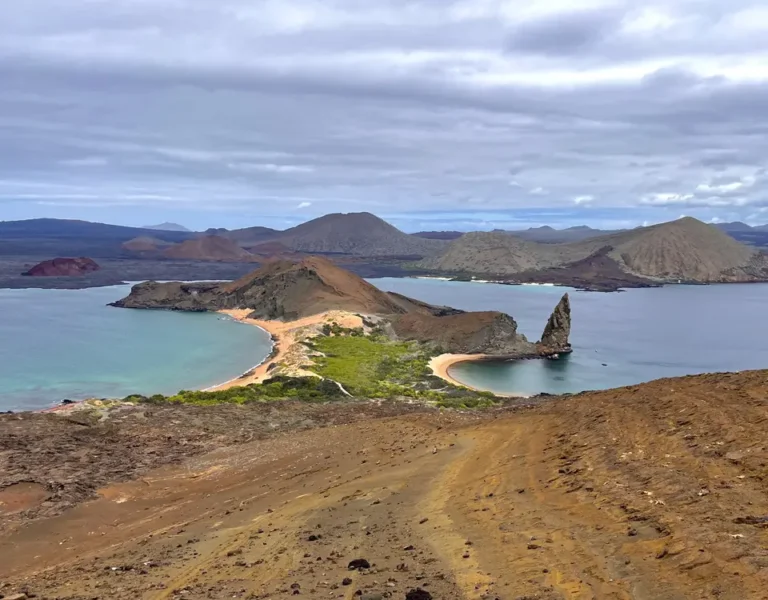
From the summit of Bartolome, we have the most famous view, overlooking the pinnacle rock and Santiago Island beyond. This volcanic scenery has often been linked to a lunar landscape. The altitude of the island is just 114 meters. From the trail to the top of the island we observe spatter cones, lava tubes and very few plants. This island has a small colony of Galapagos penguins which is the only species of its family to live in the tropics and has only one population in the northern hemisphere. This can be observed during a boat ride activity.

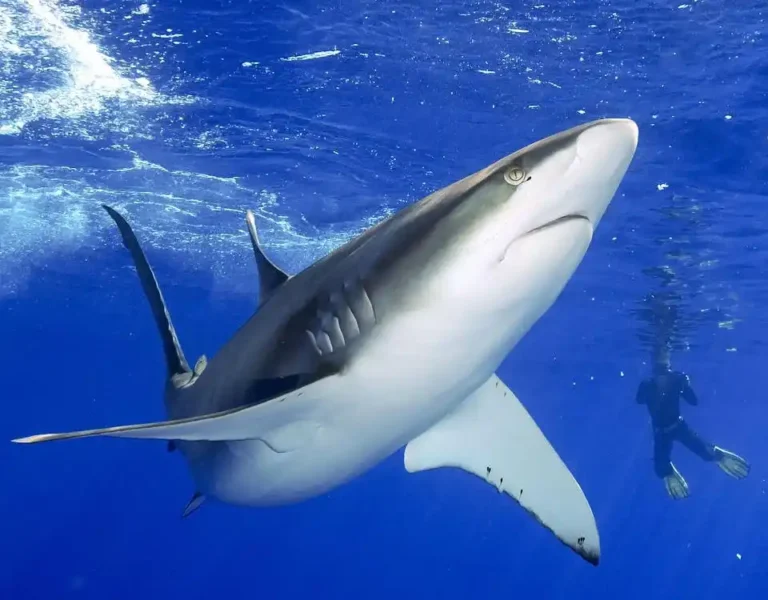
We have a snorkeling time with good possibilities to see Galapagos penguins, white-tipped reef sharks and playful sea lions.

This site located at the southeastern part of Santiago Island is of important geological interest. Extensive lava flows, “pa-hoe-hoe” which is a smooth ropy formation and “aa” which is explosive, were formed about 120 years ago. In the middle of the lava flow, older reddish-yellow colored tuff cones appear. There are few plants well adapted to the dry conditions such as Mollugo grow out of the fissures, lava cactus and chamaesyce. Tree molds are holes in the surface of hardened lava where a tree once stood, indicating that in that position large size plants grew in small crevices, until the lava flow of past eruptions burned down the flora of the island.

Day 5: Santa Cruz - Baltra

Santa Cruz Island: Highlands Tortoises Reserve and Transfer out to Baltra Airport

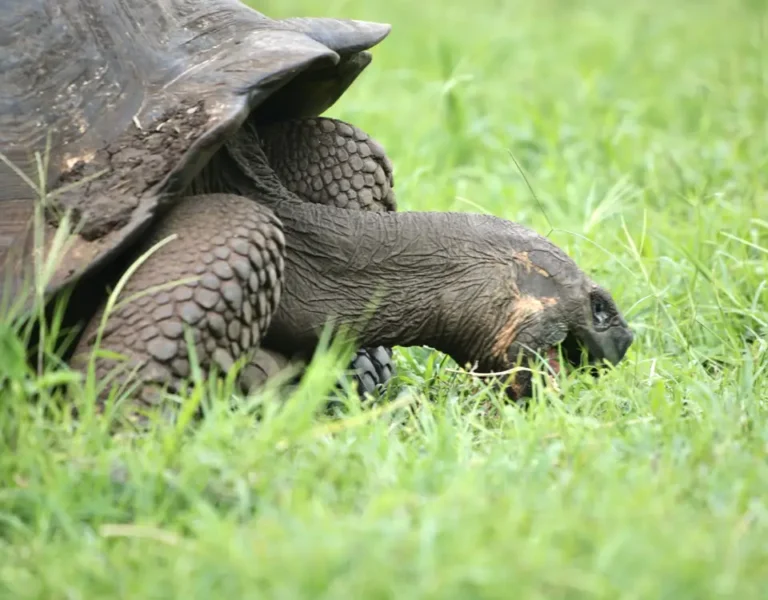
After a bus ride of 40 minutes from Puerto Ayora, we have the highlands in front of us, during our walk is possible to admire different kinds of birds, such as tree and ground finches, paint-billed crakes, yellow warblers and cattle egrets (often standing on the tortoises’ shell and cows). This expedition offers great opportunities to see the contrasts of the different ecosystems that Galapagos has in each island. Galapagos giant tortoises are present on the trail, wandering through pastures in the paddocks. A light rain jacket is suggested to visit this point because usually it is misty or rainy.

After the excursion we go back straight to the Baltra airport for your flight to the mainland

Itinerary 6D/5N A Southern (Tuesday to Sunday)
|
Day 1: San Cristobal

San Cristobal Island: Transfer in and Giant Tortoises Breeding Center

In the afternoon, we will visit the David Rodriguez giant tortoises breeding center also known as “La Galapaguera”. Here the tortoises wander in a semi-natural habitat, which will be perfect for photography. It will be the only chance to observe this emblematic species. Along the trail you will be able to see: San Cristobal mockingbirds, lava lizards, Darwin finches, yellow warblers and Scalesia trees, which are endemic from the Galapagos.

Day 2: Española

Española Island: Suarez Point and Gardner Bay

This is one of the highlights of our cruise. At the moment of arrival at the pier we will be received by a welcome committee of marine iguanas and sea lions. We will meet the biggest bird of the archipelago, the large Waved albatross, which use the edge of the cliff to start the fly. Suarez Point seems to have everything: Nazca boobies, endemic lizards, gulls, Darwin finches, Galapagos hawks, endemic mockingbirds, Galapagos doves and even a dramatic blow hole.

One of the most beautiful beaches in all of Galapagos, is located on the north-eastern coast of Española, Gardner Bay has a white sandy coral beach giving us the chance to observe one of the biggest colonies of Galapagos sea lions. We will see Española mockingbirds, they enjoy flying around the visitors. After our excursion we can also snorkel from the beach, in the shallow waters of the bay or relax and enjoy the landscape.

Day 3: Floreana

Punta Cormorant, Devil´s Crown, Post Office Bay and Baroness Lookout

After a wet landing, we will walk on an olivine green sanded beach. Our walk is going from the beach through the vegetation (white and black mangrove, holly stick, endemic Scalesia villosa), to get the first viewpoint to look for the famous flamingos, common stilts, white-checked pintail ducks and other migratory birds. The other trail goes to another beautiful white sandy beach, where the Green Pacific Sea Turtles come for nesting during the breeding season. It is not permitted to walk in the water due to the Sting Rays that may be hiding in the sand. Occasionally we observe small reef sharks along the shoreline.
Deep water snorkeling is another optional activity around the Devil’s Crown which is a volcanic natural formation where we have the chance to see white-tipped reef sharks, reef fish such as parrot, trumped, puffer, king angel, surgeon fish and occasionally Galapagos sea lions.

Located on the north side of Floreana, the Post Office Bay was named because in 1973 Captain James Colnett installed a wooden barrel which served as an informal post
office for sailors passing through, who would take letters with them back to their destinations. Today, visitors continue the tradition by placing unstamped postcards inside the barrel, hoping that some other traveler, going to the letter destination, will take it back for free.
We will have a wet landing on a greenish beach for a short walk to visit the Post Office Barrel, we will walk back to the beach for snorkeling in the shallow waters, good opportunity
to observe marine turtles and sting rays.
Our next optional activity will be in the Baroness Bay, where we can kayak and see great scenery with mangrove trees and volcanic natural formations.

Day 4: Santa Fe - South Plazas

Santa Fe Island and South Plazas Island

We will have a wet landing on one of the two white sand beaches where a big colony of sea lions are in the area with alfa males fighting to get a harem, there is an interior path through the island with an endemic cactus forest (Barringtonensis). Santa Fe land iguanas (Conolophus pallidus), Galapagos hawk, Galapagos snakes, rice rats (one of the few endemic Galapagos rodents), a variety of finches and one of the four mockingbird species of the archipelago. Two more additional activities are kayaking or snorkeling off the zodiac in the turquoise water, good view for sea turtles, spotted eagle rays, sea lions and white-tipped reef sharks and colorful fish.

There are two Plaza Islets (north and south) located east of Santa Cruz Island. After a dry landing, the path is going along an impressive cactus forest where colorful yellow land iguanas live, it is estimated to have a population around 300 individuals; during the dry season they survive on fruits and flowers of the opuntia cacti.
South Plaza Island is the only place on Galapagos where we find hybrid iguanas (sea and land), with very sharp claws making it easy to climb up to reach the fruits of the cacti. During the cool dry season walking along the edge of the cliff we observe red-billed tropicbirds, blue footed and Nazca boobies, brown pelicans, swallow tailed gulls and frigates flying around. At the end of this path, we find a bachelor sea lion colony area; at the same time the greenish and yellowish vegetation (sesuvium edmonstonei plant) changes color creating a bright red landscape.

Day 5: North Seymour - Bachas Beach

North Seymour Island and Bachas Beach

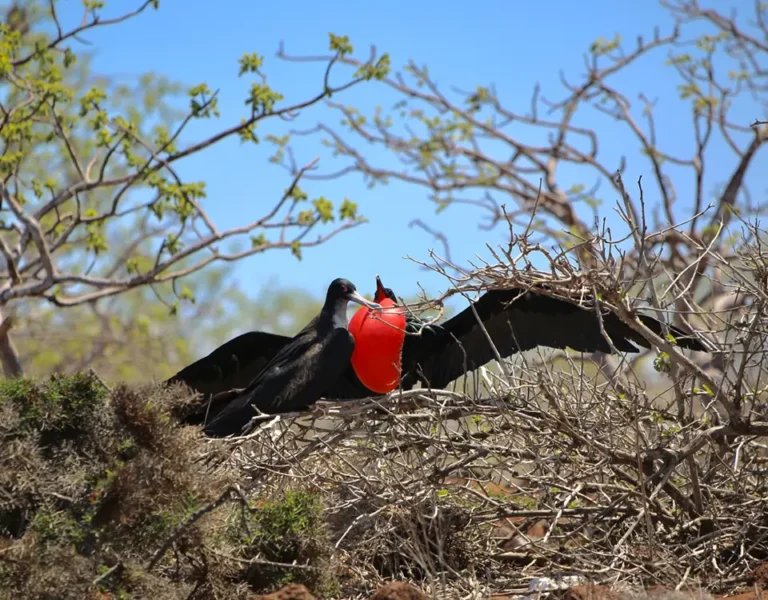
One of the uplifted islands of Galapagos: North Seymour, is a small flat island that has the perfect conditions for a nesting site for the two species of frigate birds (great and magnificent) that coexist in the Islands. Frigate birds are the only marine sea birds in Galapagos that they lost the capability to plunge in the water because they don’t produce enough oil to cover all of their plumage and that enables them to float; for this reason they need to steal the food from the other seabirds, getting the “pirates of the air” nickname. Here is the only place all year around the courting dance, especially males displaying the bright red gular sack to get a female attention. Blue footed boobies, land iguanas, sea lions, swallow tailed gulls, Darwin finches and lava lizards we will encounter along the trail of our excursion, and on a lucky day, you might even come across a Galapagos Snake.

After a wet landing on a white coral sandy beach which is one of the most important nesting areas for Green Sea Turtles they arrive usually after 6 pm, the trail is about 500 meters long divided in two sections, at the end of the trail we can find a small brackish lagoon where usually flamingos and shore birds such as whimbrels, black necked stilts, plovers, herons, white cheeked pintail, sandpipers, sanderlings, are feeding. Also Darwin finches, yellow warblers and marine iguanas. After we come back to our landing spot, we will have an outstanding chance to submerge in tropical waters.

Day 6: Mosquera - Baltra

Mosquera Islet and Transfer out to Baltra Airport

Wet Landing, Mosquera Islet is located between North Seymour and Baltra Island. This flat, sandy island is formed by a geological uplift. A colony of sea lions are present here. It is also an excellent site to observe shorebirds such as herons and lava gulls.
There is no trail on the islet, however the visitor can enjoy the open area. Most of the islet is covered with sand and barren lava rock. Very little Sesuvium portulacastrum plants grow on the sand.
After the visit we will sail to Baltra Island for your return flight to the mainland.

Itinerary 6D/5N C Western (Thursday to Tuesday)
|
Day 1: Baltra - Santa Cruz

Baltra airport Transfe in and Santa Cruz Island: Charles Darwin Research Station

Passengers are picked by our naturalist guide and taken on an hour bus drive to the pier to board the Galapagos Sea Star Yacht.

When we visit the station, we will have the chance to learn about the role of the Charles Darwin Station in the protection and conservation of the islands. Tortoises from different islands (Santiago, Santa Cruz, Floreana, Pinzon) are present at this breeding center. The National Park service with the help of the Charles Darwin Station helps to restore populations of different species of tortoises, according to the total land surface of each island. After the visit, we will also have some free time to visit the town and shop for souvenirs.

Day 2: Isabela

Tintoreras Islet, Sierra Negra Volcano and Wetlands

We will have a boat ride to look for blue footed boobies, pelicans, herons and Galapagos Penguins, followed by a dry landing for a loop trail. This small islet is the result of a volcanic uplift and home of one of the eleven sub-species of marine iguanas (baby marine iguanas), lava lizards, Galapagos sea lions and yellow warblers. There is a channel, locally called Tintoreras, after the presence of white-tipped sharks resting on the bottom of this canal.

Sierra Negra is 60 to 40 km wide and with 7 to 10 km length, is the largest and simultaneously the shallowest (elliptical) caldera of all Galapagos volcanoes. It is often said that Sierra Negra is the second largest caldera in the world, but it is not, still, it ranges in the first fifty or so largest calderas of our planet. The caldera itself has undergone several episodes of collapse, upheaval and deformation. To visit this amazing formation, we will land on Puerto Villamil where we will head up by bus ride to the slope of Sierra Negra volcano.

Good hiking shoes and light rain jackets are highly recommended for this hike.

After a dry landing on a jetty, we have a five-minutes bus ride to get to the Jacinto Gordillo breeding center to observe the Galapagos giant tortoises from various sites of Isabela, on different ages which are unique for this island, followed by an interior trail through mangrove forest and wet lands at both sides. Flamingos, herons, marine iguanas, migratory
birds are often seen. This trail will end in front of a beach, where you will have free time to
enjoy the view and the little village can be visited too.

Day 3: Isabela

 Punta Moreno and Elizabeth Bay

Wet landing on the lava field for a long walk where we find a great volcanic formation giving the chance to the photographers to take nice photos. Two types of lava flows are found Pahoehoe and “aa”. Pahoehoe lava has a billowy surface, ropy in places, looking almost smooth enough to be soft, fresh pahoehoe lava has a paper-thin, shiny black glass trust that reflects light in iridescent colors. Cooler lava, pastier and stiffer, tears itself apart through its own forward motion creating rubbly aa.

We have a trail on the bare lava with lagoons to occasionally observe flamingos and wading birds. Boat ride activity to look for the biggest marine iguanas, Galapagos penguins, flightless cormorants, pelicans and blue footed boobies, deep water snorkeling off the zodiac.

Elizabeth Bay is located at the west side of Isabela Island, the use of outboard motors is forbidden, we have a boat ride inside of the bay surrounded by red mangrove trees to observe in the water spotted eagle rays, golden rays, sea turtles, flightless cormorants. This a natural mating area for sea turtles, we will move with paddles only to avoid disturbing the marine wildlife.

Marielas islets are found in front of the visitor side, where the largest Galapagos penguin colony, big marine iguanas, blue footed boobies and brown pelicans are present.

Day 4: Fernandina - Isabela

Fernandina Island: Punta Espinoza and Isabela Island: Tagus Cove

Fernandina is the youngest of the Galapagos Islands, and it is considered the best-preserved island in the world. Free of introduced species. Espinoza point is located in the northeastern part of Fernandina Island.

Over the last 50 years there have been more than ten eruptions. As a result of this volcanic activity, Punta Espinoza has been uplifted 90 cm in 1975. Coral reefs and mangrove roots are exposed to the strong ties which are unable to survive.

Fernandina has a high diversity of species such as Galapagos hawk, two species rodent, one species of snake, lava lizard, flightless cormorant, Galapagos sea lion (baby sea lions enjoying the intertidal swimming pools), sally light foot crab and marine iguana. Snorkeling on the zodiac, it is a great and only chance in your trip to observe marine iguanas and sea turtles feeding on seaweed underwater. Flightless cormorants will show us their extraordinary adaptation to get food underwater having stronger muscles on their feet and legs, giving them the possibility of high-speed diving.

Tagus Cove is located at the northwestern side of Isabela Island, after a dry landing we have a wooden stairway, its name originated when the British vessel “Tagus” visited this cove. Sailors began to make graffiti on the cliff around the cove until the National Park Service decided to stop. The trail leads to Darwin’s salt-water crater lake, excellent views of lava elds and volcanic formations. We will return by the same path for a boat ride along the shoreline full of marine wildlife, during this activity we will observe blue footed boobies, brown noddies, ightless cormorants and the famous Galapagos penguins which are only 35 cm tall; the only penguin species in the world to live within the tropics having a small colony on the northern hemisphere; 95% of the population is found at the west side of Isabela and Fernandina islands. A great location for snorkeling to look for sea turtles and ightless cormorants in the waters.

Day 5: Santiago

Espumilla Beach and Puerto Egas

Espumilla beach is located at the northern end of James Bay. It is an important nesting side for marine turtles, a lot of ghost crabs hide in the sand. There is an inland hiking trail when occasionally there are flamingos and Galapagos
pin-tail ducks. The trail loops through the arid zone, where you can observe some bird species including Galapagos hawks, Galapagos mockingbirds, Darwin finches, yellow warblers and the Galapagos doves. Optional snorkeling activity.

Wet landing on a black volcanic sandy beach, where is the resting side of the Galapagos sea lions. There is a loop trail, the first section is formed of volcanic ash and the second half is an uneven terrain of volcanic basaltic rock, the coast is home of a variety of animals including sea lions, marine iguanas, sally light-foot crabs, herons, Darwin finches, yellow warblers, migrant birds (whimbrels, ruddy turnstones, wandering tattlers, semipalmated plovers), at the end of this site we have natural volcanic formation called the grottos of Galapagos fur seals.

The interior trail leads to the beach where usually Galapagos hawks are present.
A great location for snorkeling from the beach, playful and curious sea lions swimming around the visitors, colorful tropical sh and occasionally marine turtles and white-tipped reef sharks are found in the waters.

Day 6: San Cristobal

San Cristobal Island: Lobos Island and airport
We have an early visit to this little island which is located close to Port Baquerizo Moreno. We have a big colony of Galapagos sea lions by the landing site and the barks of the males are very noticeable. The trail leads through a semi desertic area, blue

footed boobies nest on the ground and frigates on the trees. The vegetation is represented by black mangrove trees, salt bush and holly stick mostly.

After the visit, passengers will be transferred to the airport for their return flight to Guayaquil or Quito.

Please note that these itineraries may change without prior notice due to operational reasons, weather conditions, or directives from the galapagos national park authorities.

Explore the

place you stay

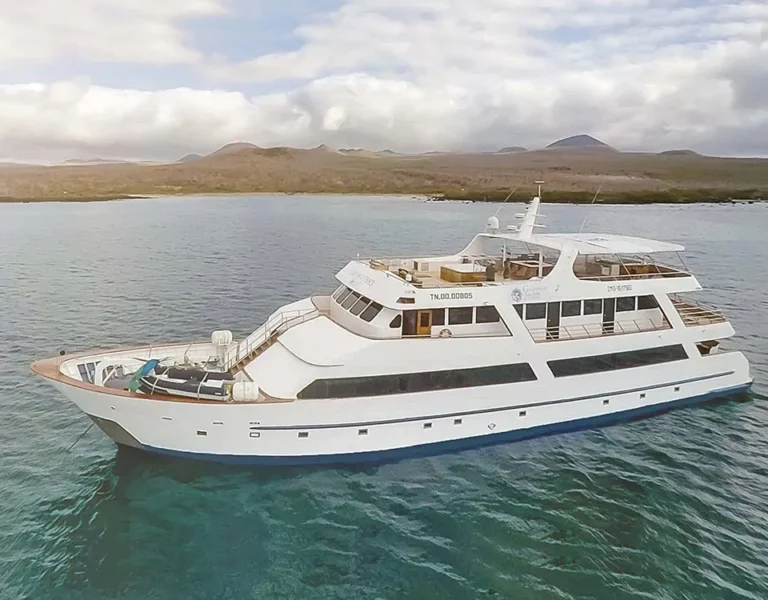
  • Category: First class Motor Yacht
  • Capacity: 16 guests
  • Cabins:  8
  • Guide:  1 Naturalist Guide
  • Length: 42 m.
  • Beam: 9 m.
  • Speed: 10 knots
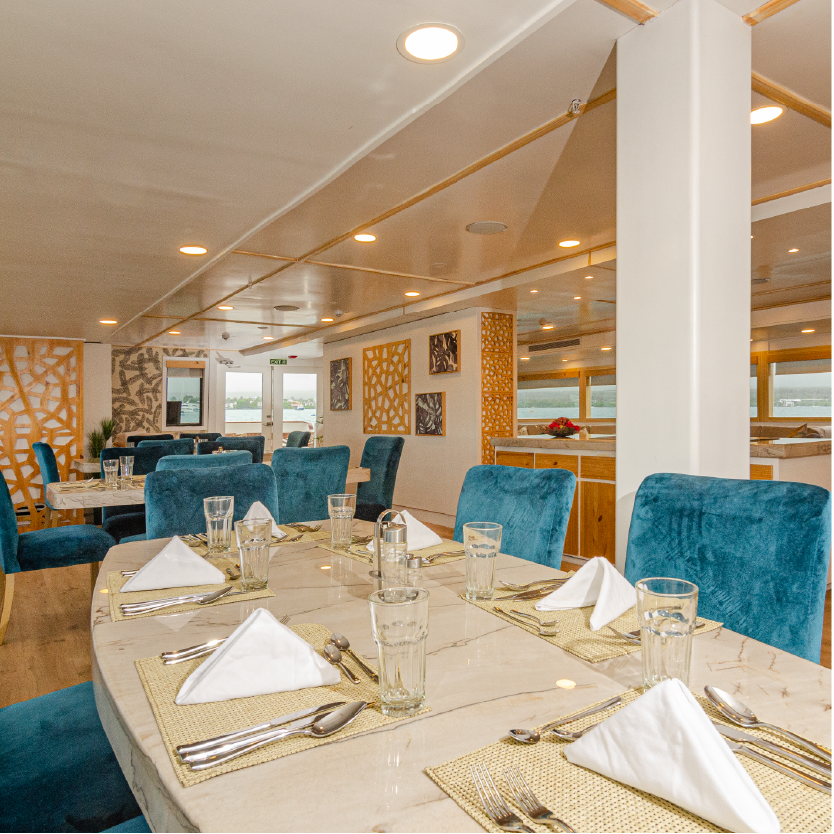
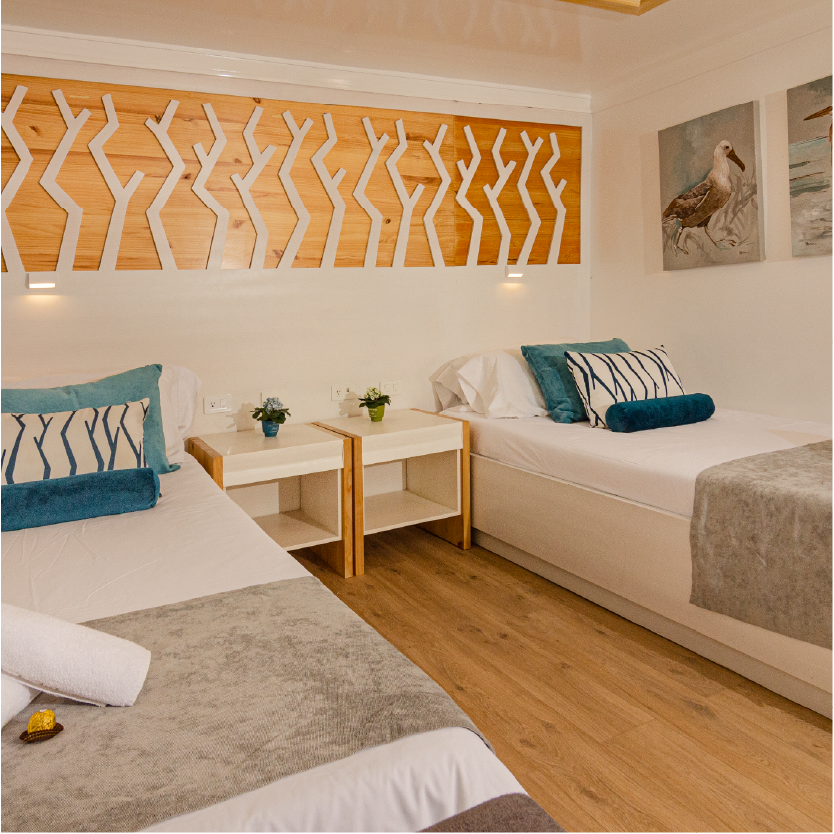
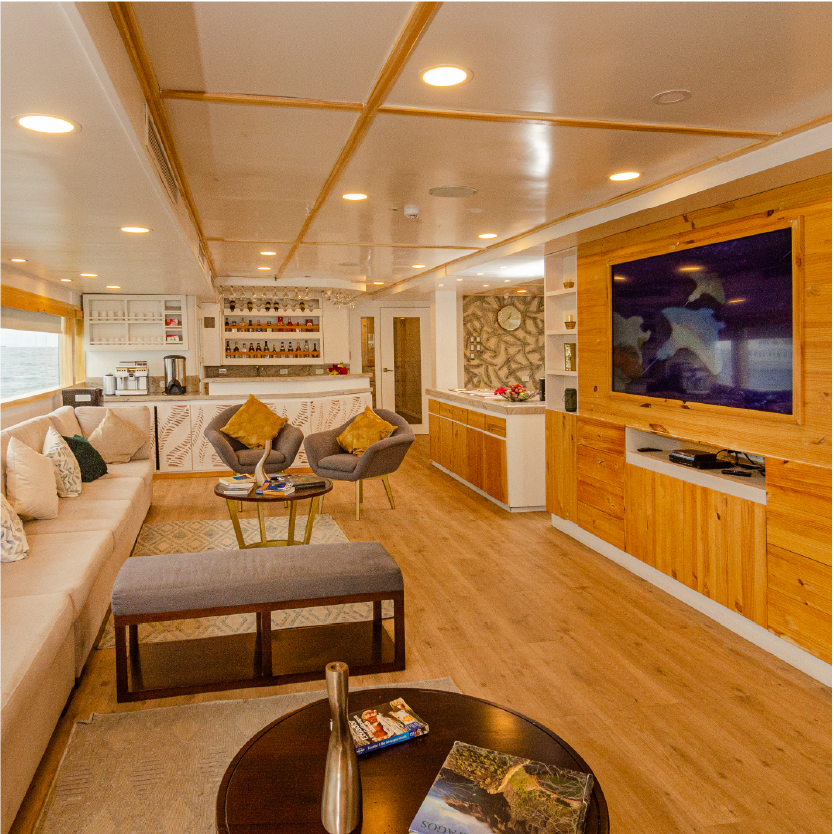
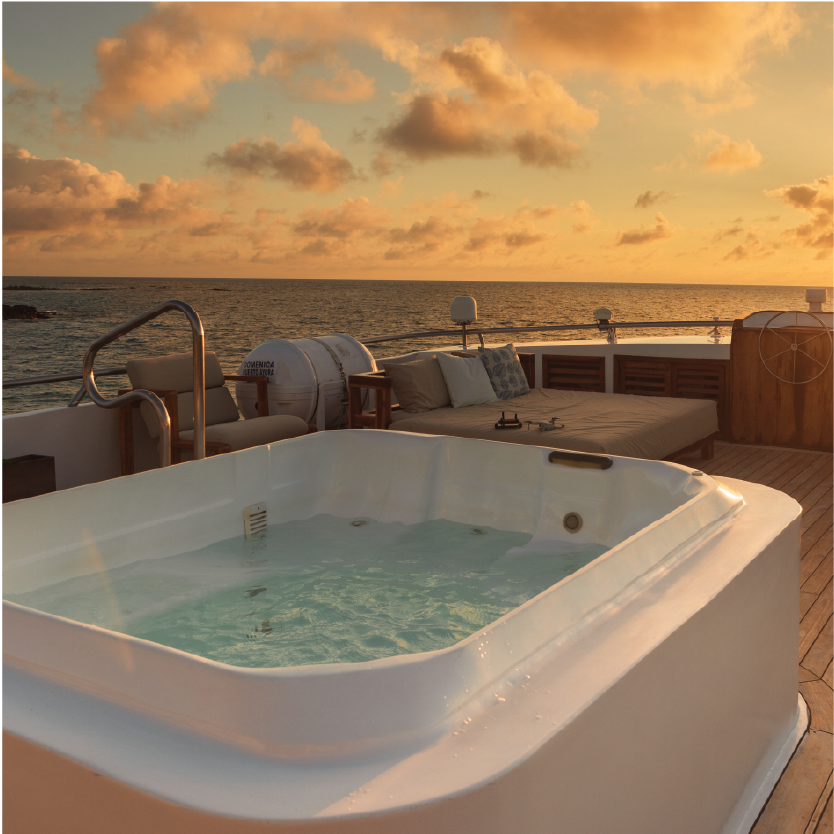
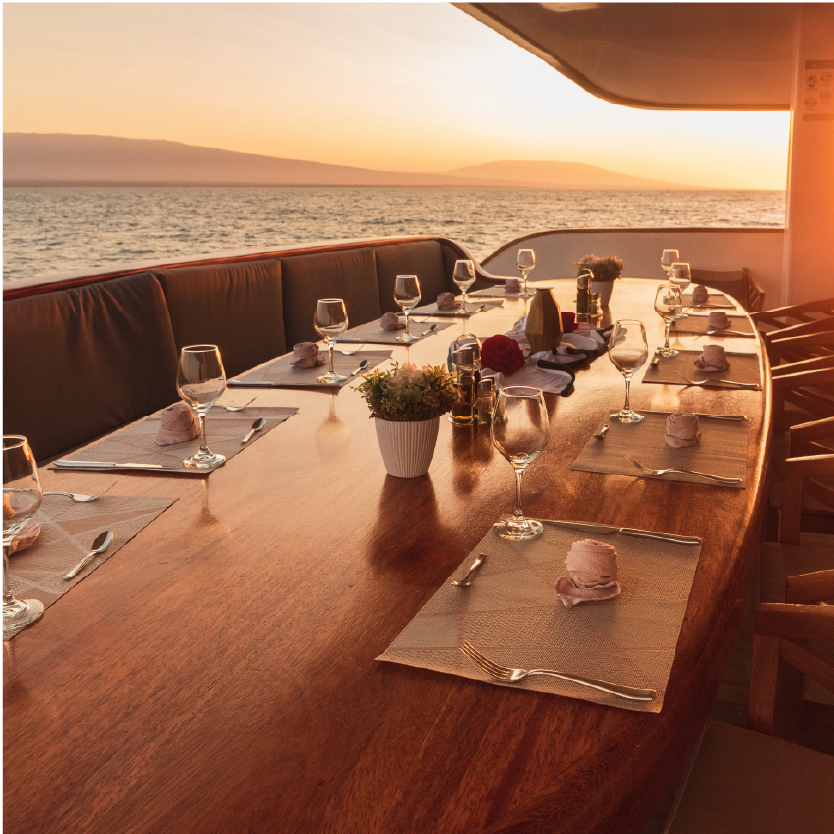
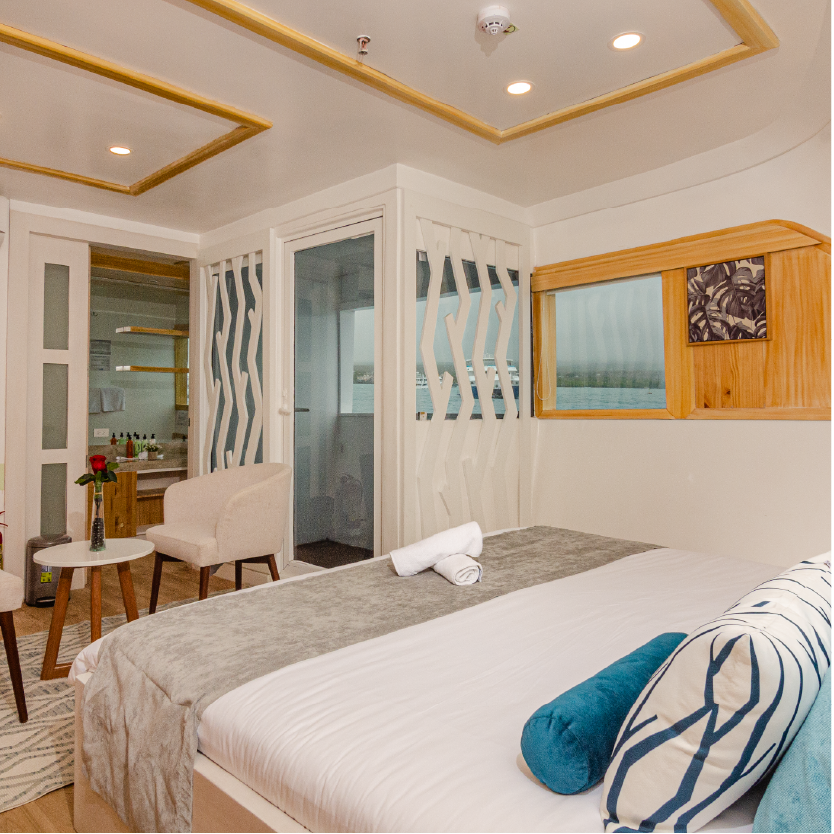
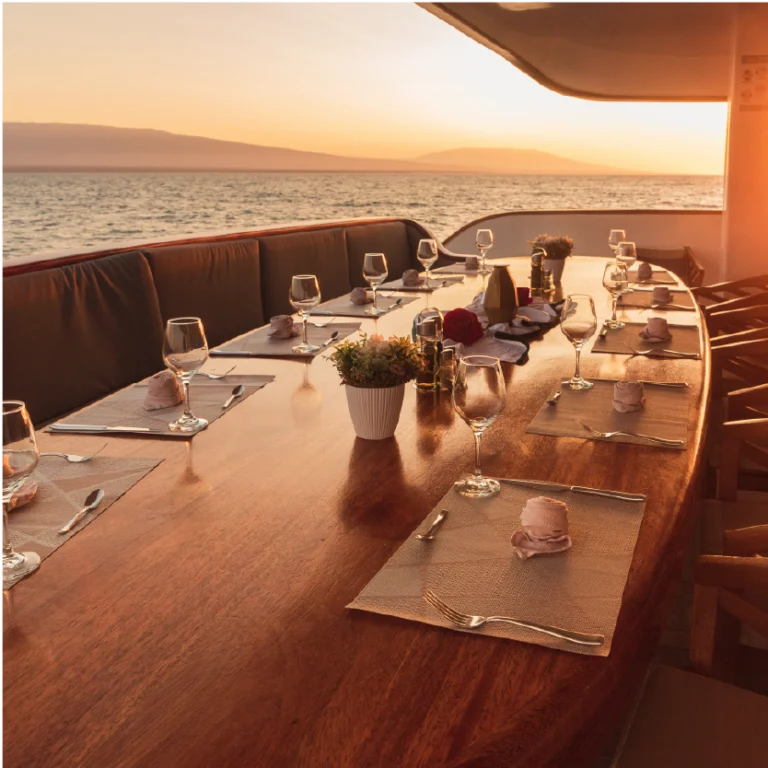
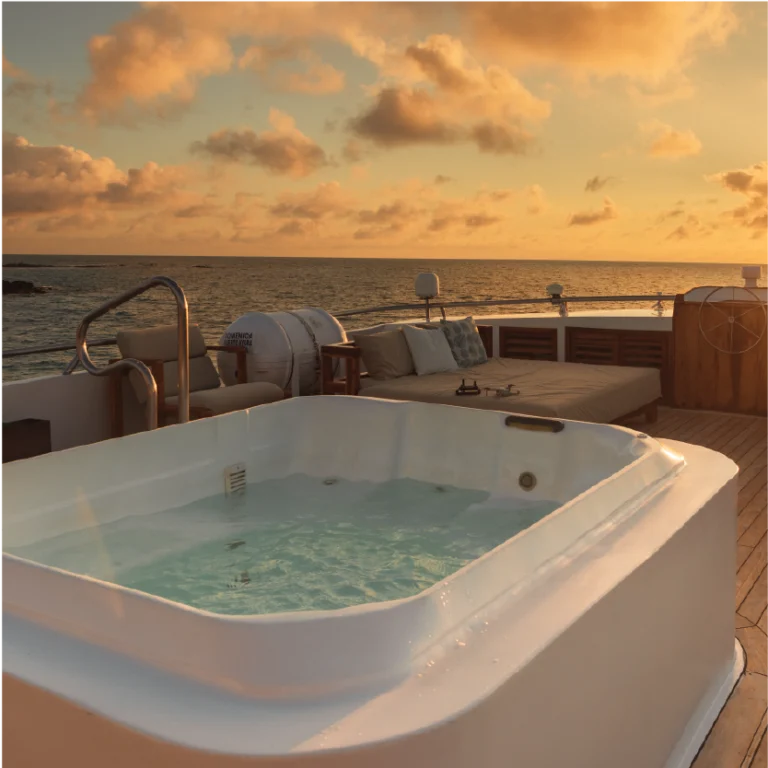
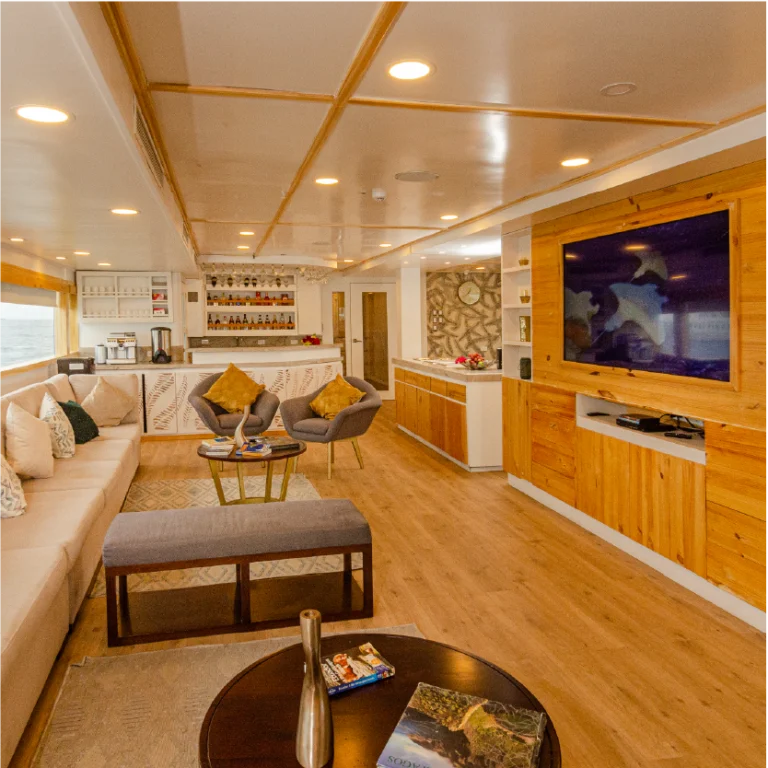
  • Facilities: 7 Suites overall 25mts (matrimonial and twin) and one Sea Star Suite (approx. 35 m), private bathroom, hot/cold water, air conditioning (with independent controls); connected suites are available for families. Social areas include a Saloon, mini-library, video library, living room, dining room, bar, 2 Jacuzzis, and sundeck.
Prices and Booking request

Dates & Rates

To request a quote or make a reservation let's start with your details...*

Arrival date *

Please let us know the date you wish to start your adventure.

What's Included

  • Accommodation as confirmed.
  • All mentioned meals (full-board); filtered water, tea and coffee.
  • All guided excursions and activities as mentioned in the itinerary by a National Park certified naturalist guide.
  • Beach towels and snorkelling gear (snorkel, mask, flippers; optional wet-suits for hire).

What's not Included

  • Round-trip flight to the Galapagos.
  • Soft and alcoholic drinks.
  • Galapagos National Park entrance fee and Transit Control Card (currently $220, subject to change).
  • Personal travel insurance.
  • Personal expenses, extras and tipping.

Get in touch with us

We customise every trip to you and our quotes are bespoke. We’re here to offer advice, recommendations and answer your questions.

"*" indicates required fields

This field is for validation purposes and should be left unchanged.
Name*
Consent*

Explore more of

Galapagos

Galapagos First-Class boat cruises offer a high level of comfort and service, providing spacious cabins, elegant common areas, and gourmet dining. These vessels typically feature attentive staff, expert naturalist guides, and well-designed itineraries that maximize wildlife encounters and exploration. Expect a more intimate and luxurious experience, balancing immersive adventure with exceptional amenities for a truly memorable journey through the archipelago.

Discover First Class Boats holidays

All you need is ecuador right.png
Ecuador Nature Expeditions
ENE
  • Our Company
  • Testimonials
  • Press center
  • Contact Us
Ecuador Travel
  • About Ecuador
  • Ecuador travel guide
  • Tailormade expeditions
  • Last minute tours
Destinations
  • Galapagos
  • Amazon rainforest
  • Andean highlands
Travel style
  • Birdwatching
  • Diving
  • Trekking
  • Cultural diversity
  • Boat cruises
  • Jungle expeditions
  • Family vacations
  • Horse riding
  • Biking
Contact the team
  • Call us USA +1 305 897 1251
  • Call us Ecuador +593 997 731 267
  • Make an enquiry
Stay in the know
  • Newsletter sign up
Make our World a better Place

Ecuador Nature Expeditions invites you to explore our world responsibly through sustainable travel choices that benefit local communities and preserve our planet’s beauty.

Connect with Ecuador Nature Expeditions
Facebook X-twitter Instagram
  • Terms & conditions
  • Cookie policy
  • Privacy policy
  • Booking and payment

+593 997 731 267 / +1 305 897 1251 – info@enexpeditions.com

Yaguarundi Viajes CIA. LTDA, 23 de Junio y Machala N68-66, 17-11-5091, Quito, Pichincha

Registered in Ecuador, RUC 1791766784001 @ Copyright 2025 Ecuador Nature Expeditions. All rights reserved

Call on +593 997 731 267 (EC) / +1 305 897 1251 (USA)
Ene logo
Ecuador
Galapagos
Rainforest
Highlands

Featured activity

  • Ecuador
  • Galapagos
  • Rainforest
  • Highlands
Ecuador, Cotopaxi
Ecuador

Ecuador travel offers an incredibly diverse and compact experience. From the unique, wildlife-rich Galapagos Islands and the majestic peaks of the Andes Highlands with their vibrant indigenous cultures, to the lush, biodiverse Amazon rainforest and the laid-back Pacific coast, Ecuador packs a world of natural wonders and cultural encounters into a relatively small area.
Dicover more
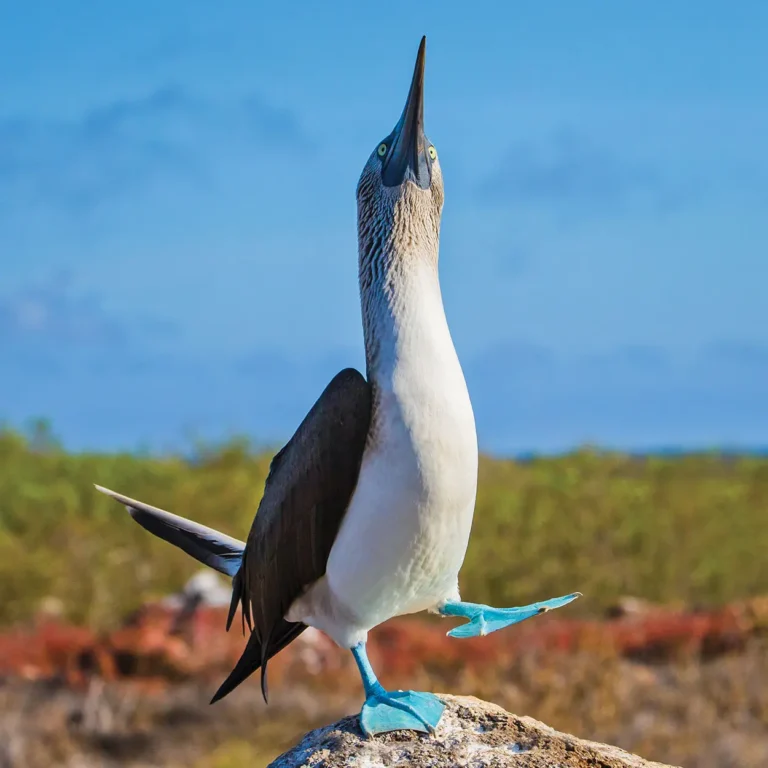
Galapagos Boobie
Galapagos

Galapagos tours provide an incredible opportunity to explore a unique volcanic archipelago teeming with fearless, endemic wildlife. Led by knowledgeable naturalists, these multi-day excursions offer close encounters with diverse species through guided walks, snorkeling, and boat navigation, revealing the islands' raw beauty and evolutionary marvels.
Dicover more
ecuador-rainforest
Rainforest

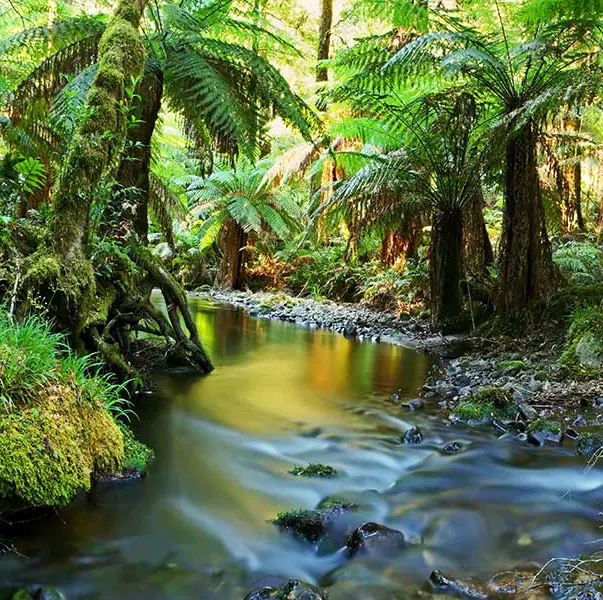
Ecuador rainforest expeditions offer deep dives into the heart of the Amazon, providing unparalleled immersion in one of the world's most biodiverse ecosystems. These journeys combine thrilling wildlife encounters—spotting monkeys, vibrant birds, and elusive predators—with cultural exchanges with indigenous communities, all while navigating lush landscapes and winding rivers.
Dicover more
Cuenca, Ecuador
Highlands

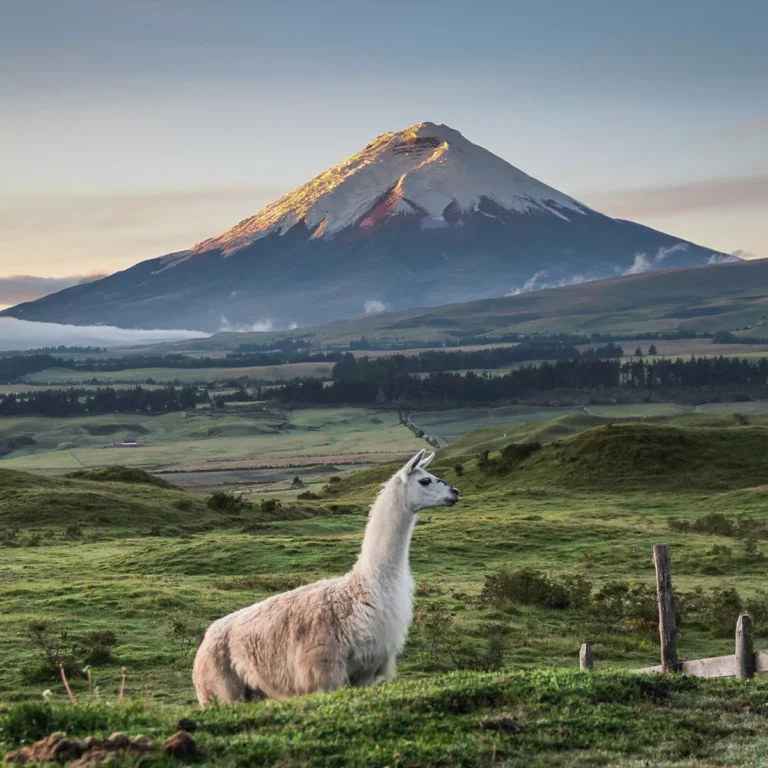
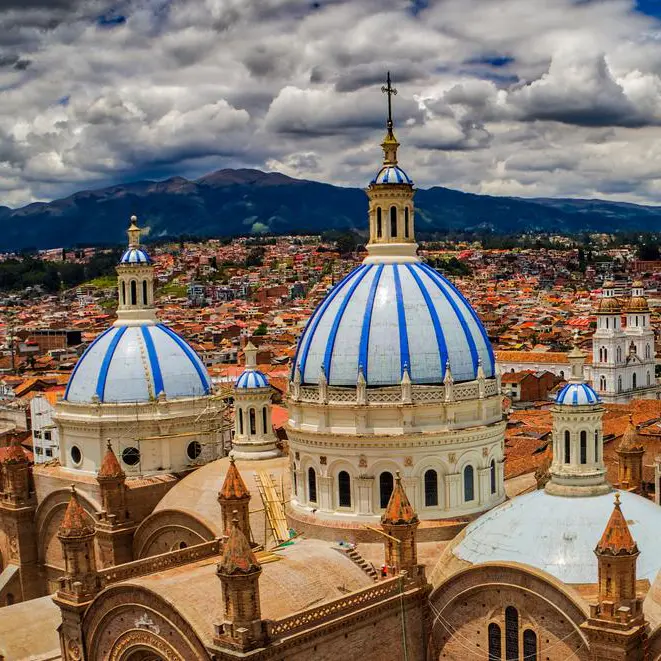
Explore the vibrant heart of Ecuador's Andes with activities like hiking majestic volcanoes (Cotopaxi, Chimborazo), exploring picturesque colonial cities (Quito, Cuenca), bargaining for unique crafts at bustling indigenous markets (Otavalo), and discovering hidden cloud forests. Enjoy horseback riding, mountain biking, or simply soaking in the breathtaking mountain vistas and rich cultural heritage.
Dicover more
  • Terms & conditions
  • Cookie policy
  • Privacy policy
  • Booking and payment
Call on +593 997 731 267 (EC) / +1 305 897 1251 (USA)
Ene logo
Birdwatching
Family journeys
History & Archeology
Hiking & Trekking
Boat Cruises
Nature & Wildlife
People & Culture
Snorkeling & Diving

Featured activity

  • Birdwatching tours
  • Family Journeys
  • History & Archeology tours
  • Hiking & Trekking
  • Boat Cruises
  • Nature & Wildlife tours
  • People & Culture tours
  • Snorkeling & Diving tours
Ecuador Birdwatching
Birdwatching tours

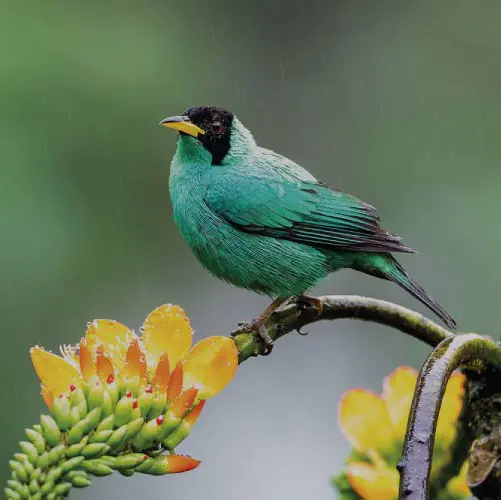
Ecuador is a birder's paradise, boasting an incredible diversity of species across its varied ecosystems. Birdwatching tours in Ecuador offer unparalleled opportunities to spot vibrant hummingbirds in the cloud forests, rare antpittas in the Andes, colorful macaws in the Amazon, and unique endemic species in the Galapagos.
Dicover more
ecuador-family-journeys
Family Journeys

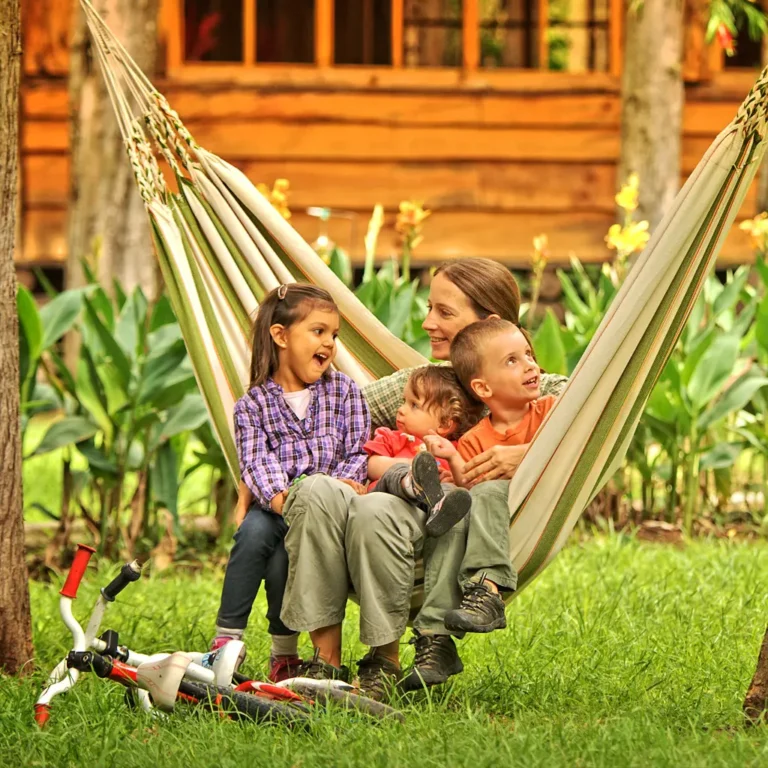
Family journeys in Ecuador offer diverse and engaging adventures for all ages. From wildlife encounters in the Galapagos and Amazon rainforest that spark wonder in children, to cultural explorations in the Andes highlands with their vibrant markets and charming towns, and relaxing moments on the Pacific coast, Ecuador provides a safe and stimulating environment for creating unforgettable family memories.
Dicover more
Ecuador History & Archeology
History & Archeology tours

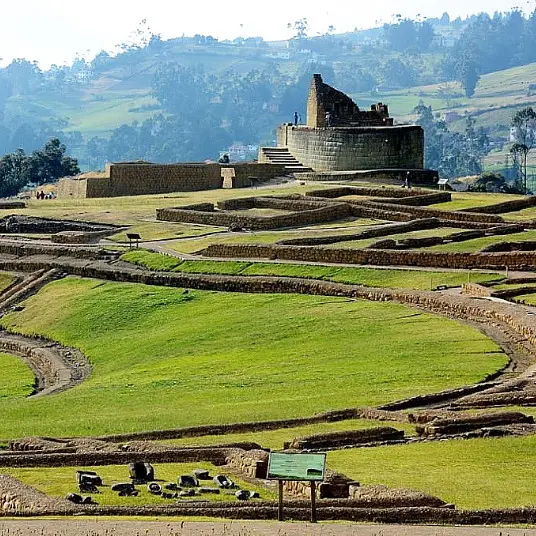
Ecuador's History & Archeology tours delve into a rich past, from ancient pre-Incan civilizations to the grandeur of the Inca Empire and the legacy of Spanish colonialism. Explore meticulously preserved colonial cities like Quito, a UNESCO World Heritage site, discover enigmatic archeological sites such as Ingapirca with its impressive Inca ruins, and learn about the diverse cultures that shaped this fascinating nation.
Dicover more
hiking-cotopaxi
Hiking & Trekking

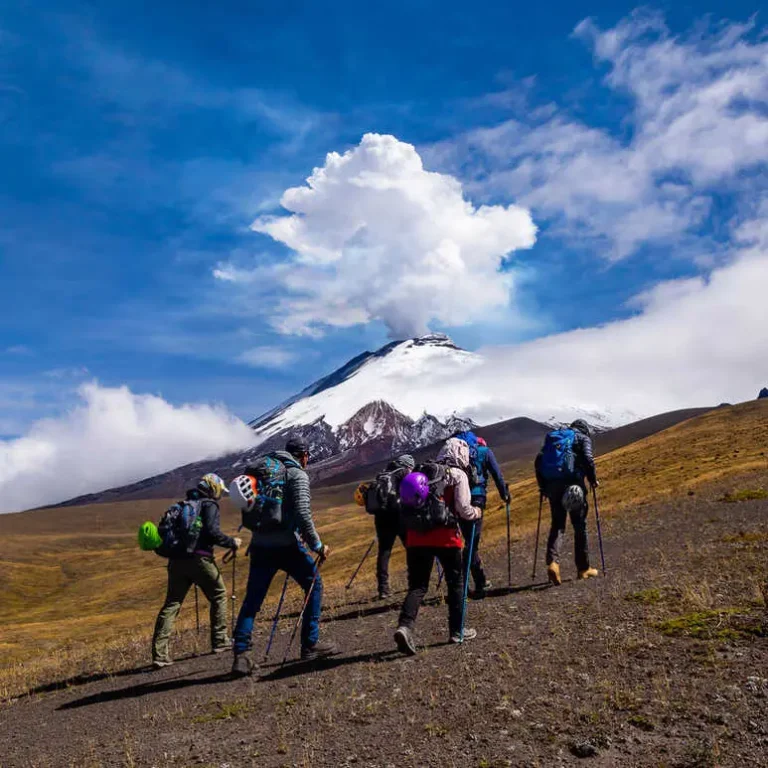
Ecuador hiking and trekking tours offer an extraordinary range of experiences amidst stunning Andean landscapes. From challenging ascents of majestic volcanoes like Cotopaxi and Chimborazo to scenic multi-day treks through cloud forests and paramo, and more gentle walks to explore indigenous villages.
Dicover more
Ecuador boat cruises
Boat Cruises

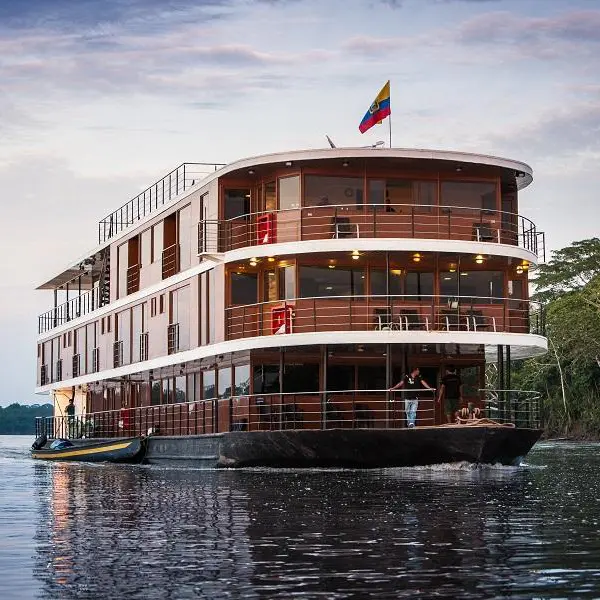
Ecuador boat cruises primarily focus on the Galapagos Islands, offering an unparalleled way to explore this unique archipelago. Options range from comfortable tourist-class vessels to luxurious yachts, providing accommodations, meals, and daily guided excursions. While less common, some river cruises also operate in the Amazon.
Dicover more
Ecuador wildlife tours
Nature & Wildlife tours

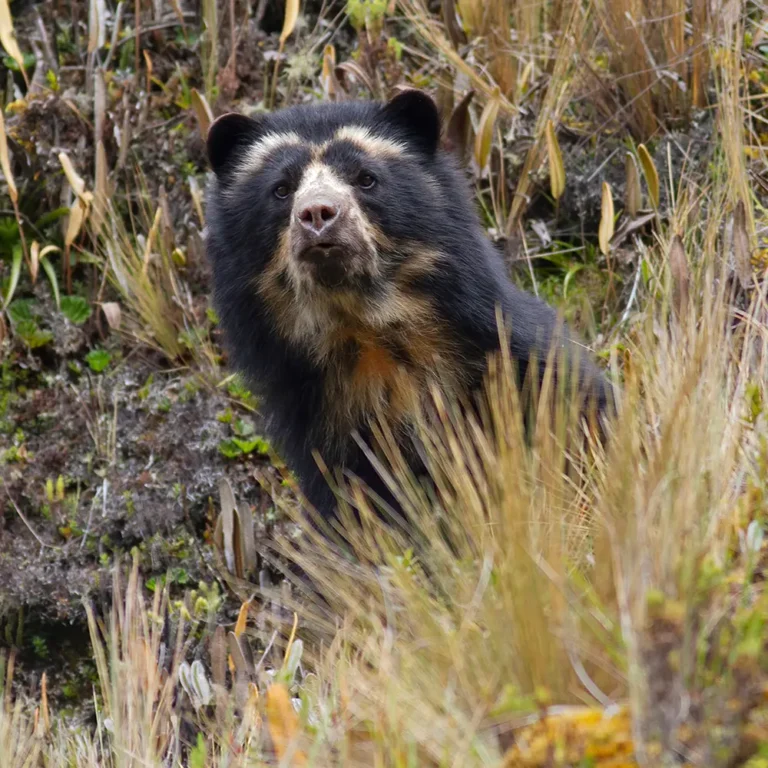
Ecuador's Nature and Wildlife tours are an absolute delight for nature lovers, offering unparalleled biodiversity in a compact country. Explore the unique, fearless wildlife of the Galapagos Islands, discover a profusion of species in the Amazon rainforest (monkeys, macaws, anacondas), and encounter rare birds and fascinating mammals in the Andean cloud forests and paramo.
Dicover more
ecuador-people-culture-tours
People & Culture tours

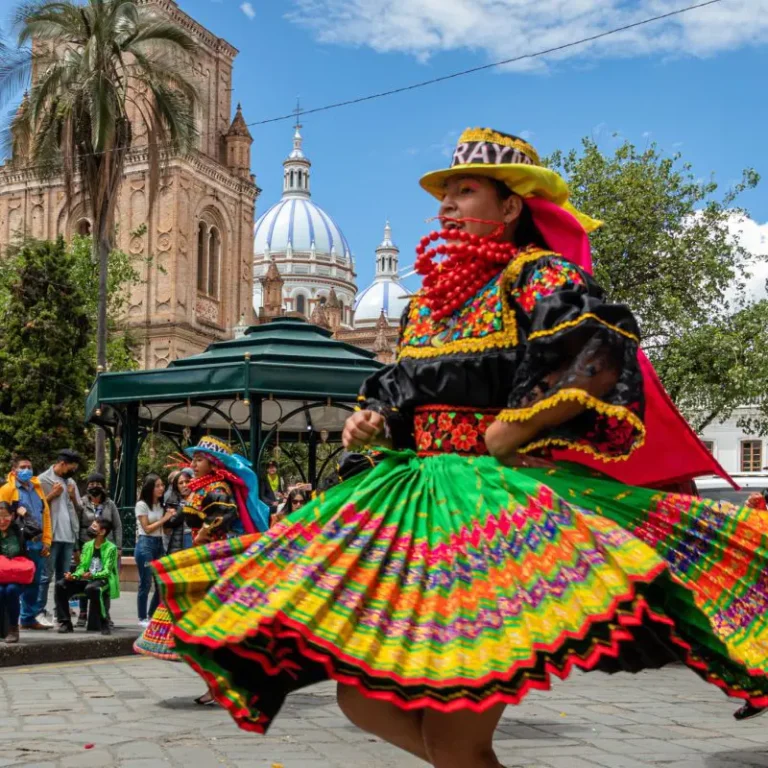
Ecuador People and Culture tours offer a vibrant immersion into the heart of this diverse nation. Explore bustling indigenous markets like Otavalo, where ancient traditions thrive through colorful textiles and handicrafts. Discover the architectural grandeur and living history of UNESCO World Heritage cities like Quito and Cuenca.
Dicover more
Ecuador snorkeling and diving tours
Snorkeling & Diving tours

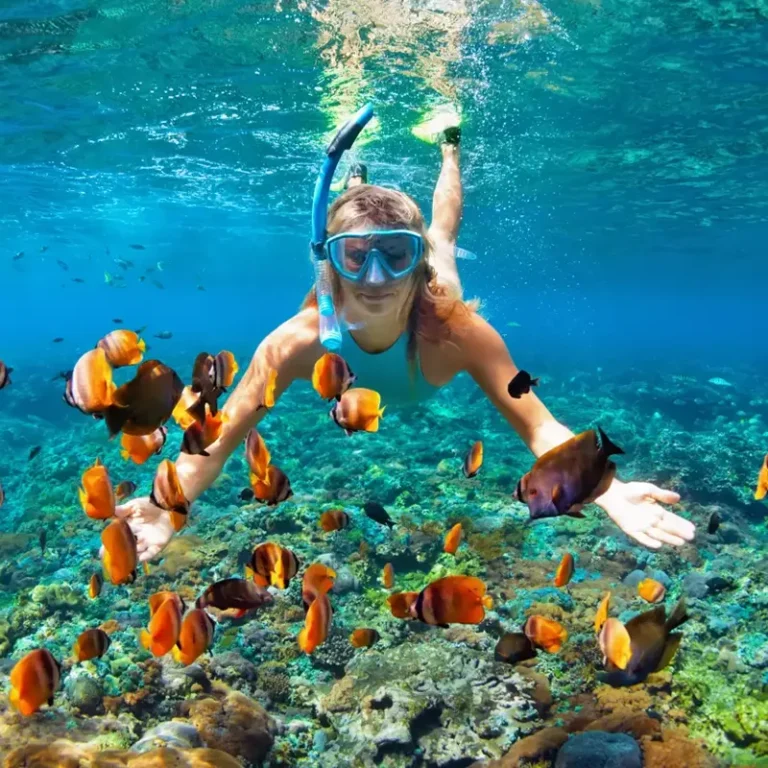
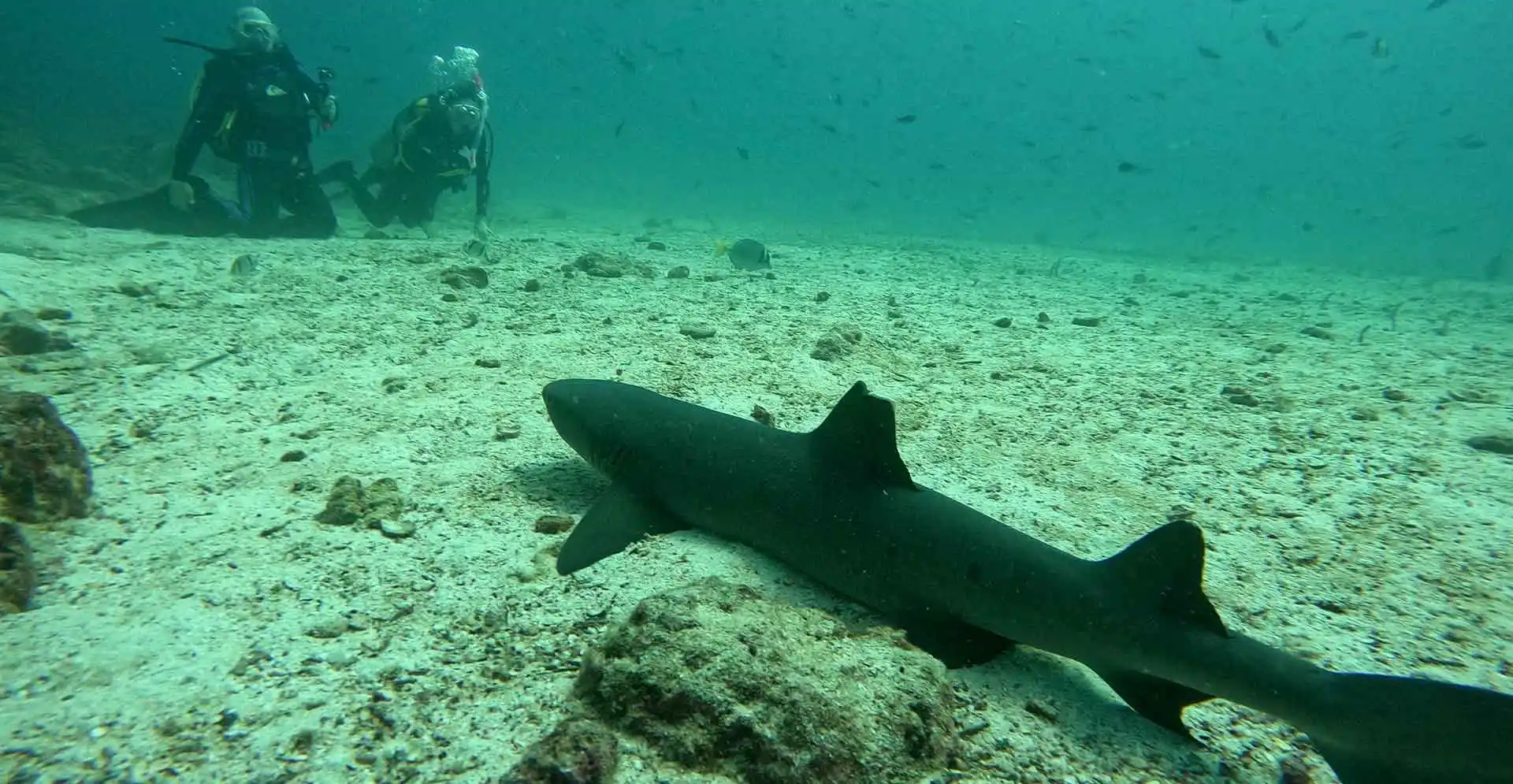
Ecuador's snorkeling and diving tours primarily focus on the Galapagos Islands, offering an unparalleled underwater adventure. Dive into crystal-clear waters teeming with unique marine life found nowhere else: playful sea lions, graceful sea turtles, hammerhead sharks, whale sharks, marine iguanas, and countless colorful fish.

Dicover more
  • Terms & conditions
  • Cookie policy
  • Privacy policy
  • Booking and payment

Stay in the know…

Sign up to our email mailing list and have all the latest Ecuador Nature Expeditions travel inspiration sent direct to your inbox.

By signing up you are giving us permission to contact you by email. Your details are safe and will be used as per our Privacy Policy.

*

Please confirm your subscription!
Some fields are missing or incorrect!

Need help? Our team is just a message away